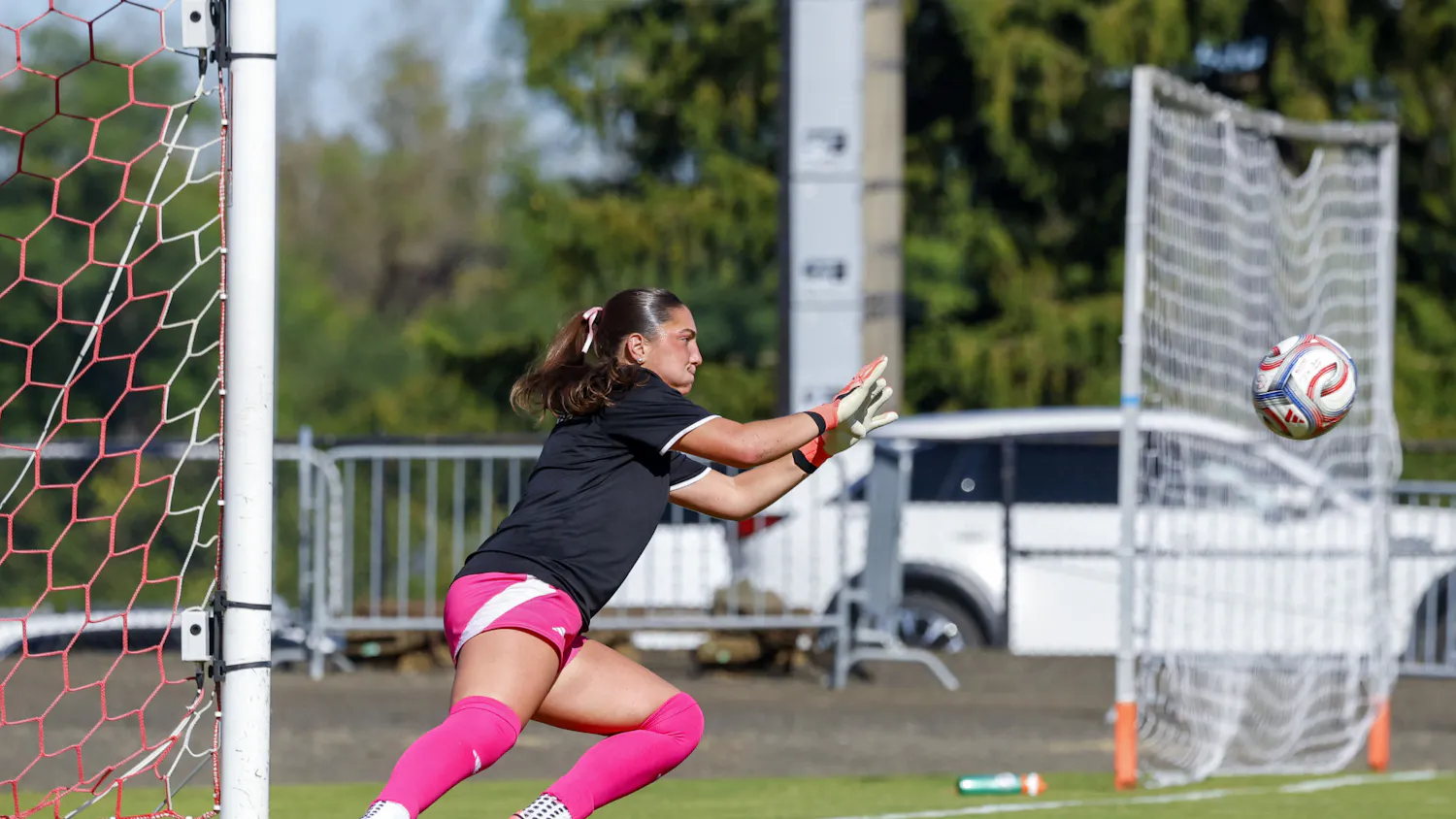
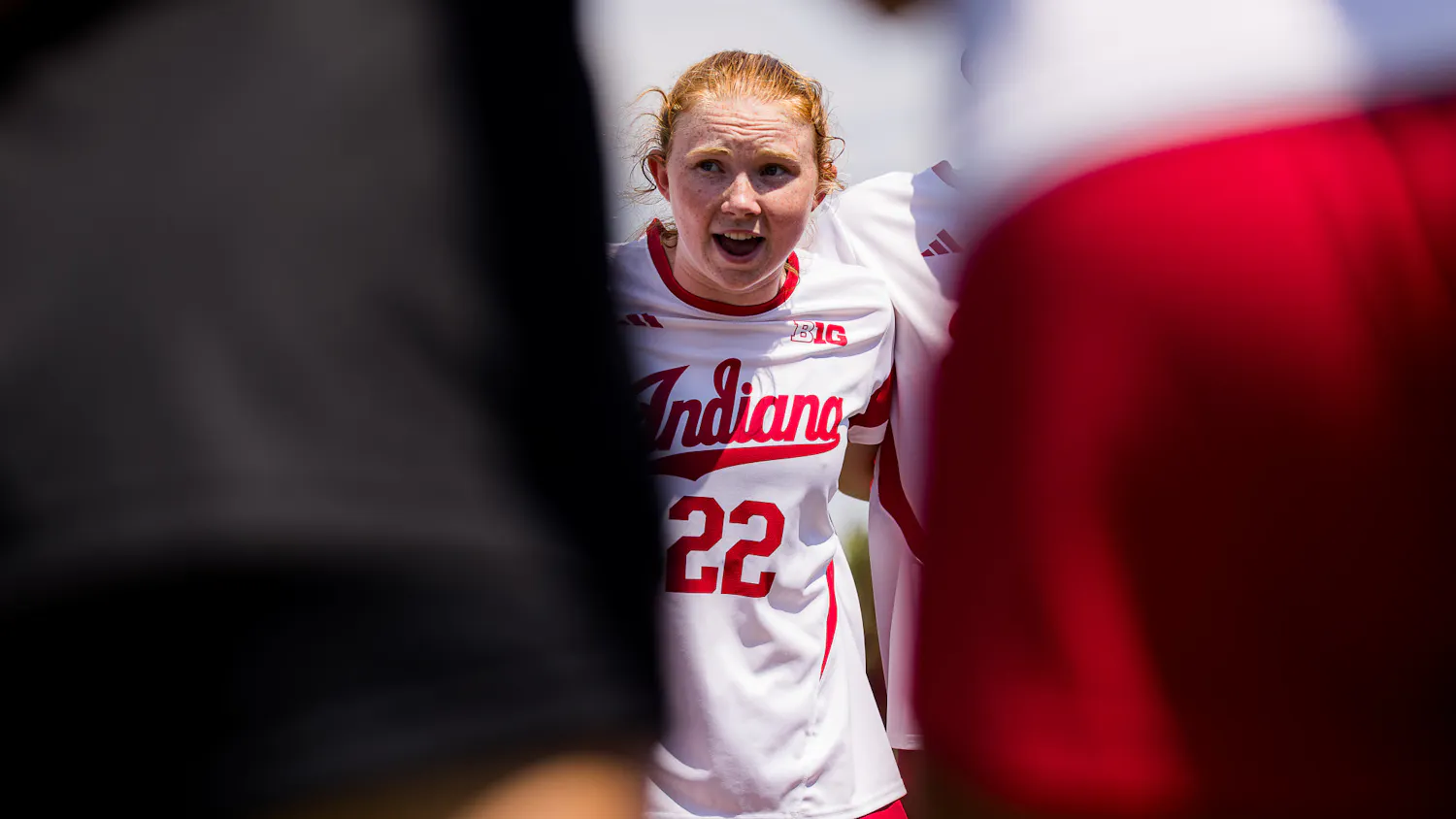
Imagine being at the doctor for a routine checkup, and the nurse begins to take your blood pressure with the cuff. The pressure gets tighter and tighter, filling with more air than you believe it normally does, eventually cutting off circulation to your hand. You begin to feel numb, and your hand starts to tingle. When the nurse returns, she leaves the cuff right where it is and sends you on your way. This is how Indiana University women’s soccer player Mary Kate Sullivan felt constantly in her legs, while trying to play the sport she loves.
Mary Kate joined the Hoosiers from Cromwell, Connecticut, leaving high school early to play soccer at the collegiate level, which had always been her dream. Since starting her soccer journey, training at a high level had been the norm for her. Training in the development academy for US Soccer, winning national championships with her club team, and traveling the country competing, Sullivan grew up surrounded by college recruits and high-level competition majority of her career.
Indiana University was one of the many options she had coming out of high school, but like many other students who step onto Bloomington’s campus, Sullivan “just had this gut feeling” that this small town would become home.
Like many athletes, Sullivan encountered setbacks that changed the trajectory of her career in ways she wasn’t expecting.
The pain began early. Since the seventh grade, Sullivan experienced pain in her calves, usually attributed to cramping or muscle weakness. What followed were countless physical therapy appointments and unanswered questions.
“My dad was a college athlete," Sullivan said, "so he is the type of person to say, ‘suck it up you’re fine,’ so for the longest time we didn’t know the extent of the injury.”

For any athlete, one of the hardest things to endure is the fear of letting teammates or coaches down. Sullivan’s work ethic and the determination to prove herself prioritized her pain, until it reached a tipping point.
“MK is a very hard worker,” friend and IU teammate Kennedy Neighbors said, “so even when she was going through all of that pain she would try to push through because she is a very team first person.”
Eventually, Mary Kate and her father, Bill Sullivan, began to consult specialists, looking for any answer to solve this issue.
“You could see it when she was playing,” he said. “It was like 'OK, this is getting really bad, we need to do something about it.'”
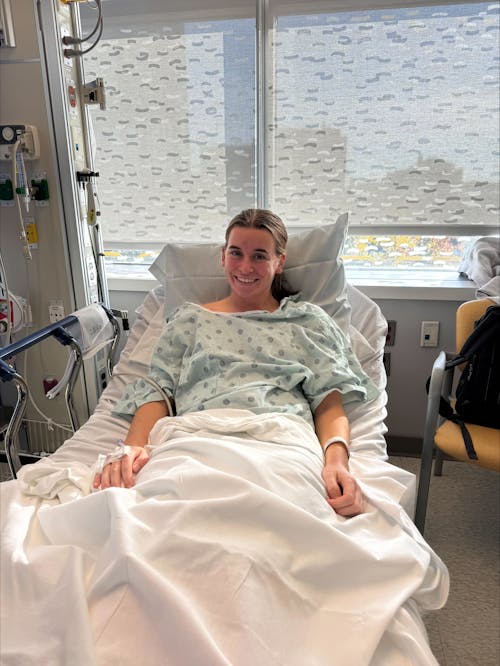
After many tests and searching for an answer with experts in Indianapolis, Mary Kate was diagnosed with Popliteal Artery Entrapment Syndrome, or PAES. PAES is a rare vascular condition where the artery behind the knee is compressed by a person’s calf muscles, cutting off circulation and restricting blood flow to the leg during exercise.
Because of the rareness of her condition, finding an effective long-term solution proved to be more difficult than one might think after finding a diagnosis. Their first solution: Botox. Receiving multiple rounds of Botox in her calves allowed for the muscle to temporarily shrink and relax, relieving pressure that was compressing her artery. Key word: temporarily.
Sullivan quickly realized this wasn’t a sustainable fix.
“My biggest strength has always been my endurance and speed, and I’ve always done well in conditioning," she said. "I remember coming back in the summer after I got Botox, and I finished last in every single spring workout and conditioning drill. It was the most humbling experience ever.”
Continuing to search for answers, Mary Kate took to social media. She researched doctors, procedures, and eventually stumbled upon another athlete with the same condition, a University of Michigan gymnast.
“Imagine finding information on TikTok," Bill Sullivan said. "…they never talked to each other, they just exchanged journals. I don’t think Mary Kate has ever spoken to her, but it was exactly what she needed.”
Gaining more insight and information about this condition, the Michigan student-athlete pointed Mary Kate and her father towards Baltimore, Maryland to visit Dr. James Black at Johns Hopkins University. Sullivan joined a trial related to PAES, and underwent surgery on both of her legs, one in November and the other in December. In this new trial, Mary Kate was able to recover at an extremely fast pace and was back on the field at the end of February.
Returning to the field finally pain free has allowed for a sense of relief for Sullivan, finally allowing her to enjoy playing at the collegiate level after a long journey.
“For me, finishing a practice or a drill that used to give me so much pain," she said. "I remember feeling like, 'Oh my gosh, it actually worked.'”
Though rewarding in the end, the journey was far from easy.
“The most difficult part was going out there and not having a visible injury that people understood," Sullivan said. "There was a lot of times people dismissed how I was feeling or couldn’t understand that I was actually in excruciating pain.”
Feeling dismissed is a problem far too common in the medical field today, more specifically for women such as Sullivan. According to a Duke University Health study from 2020, gender bias in patient care persists throughout health care, with every one in five women feeling their provider ignored or dismissed symptoms, majority assuming because of their gender. It’s difficult to believe medical providers are intentionally discriminating, but many factors may lead this to be true. For example, the lack of medical studies including women result in providers having less knowledge about the female body.

While the lack of medical studies may not be the specific case for Sullivan, her rare condition proved to be difficult to resolve.
“I just have to keep showing up and trust that I know my body, and know that it is OK to advocate for myself,” Sullivan said.
Finding a solution was all she needed, but throughout the process, Sullivan leaned on her support system, never letting it end her journey, but instead just let it be an obstacle to overcome.
Neighbors described her as “a bubbly firecracker” and someone who used still contributed, even if that wasn’t on the field. Sullivan embodied that role and the time she spent off the field, and used her assets in other ways to lead and support her teammates.
“At the end of the day I think I realized, I am so much more than an athlete," Sullivan said, "and I appreciate being able to play now so much more.”

Hoosiers end losing streak, tie Trojans 2-2