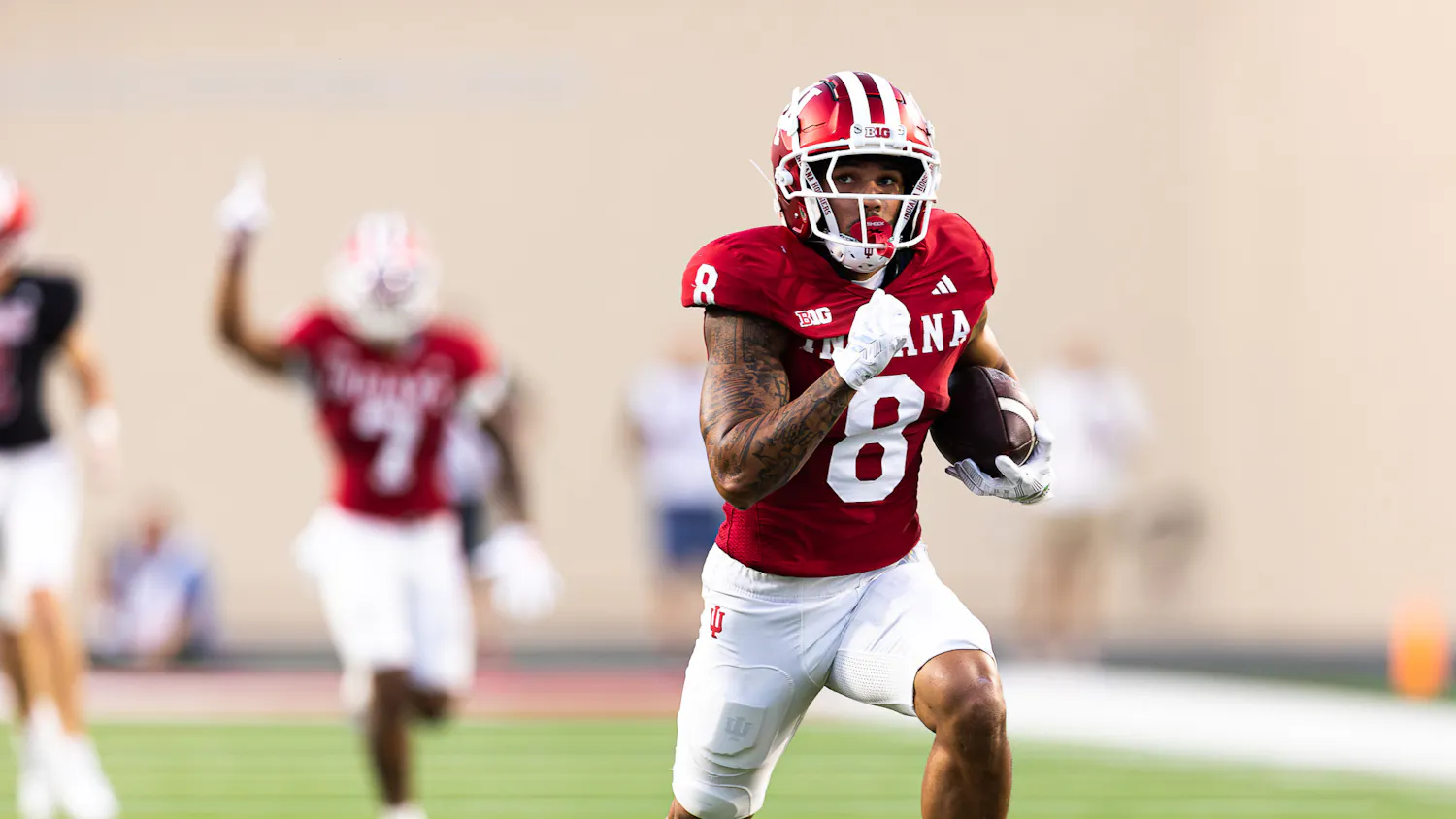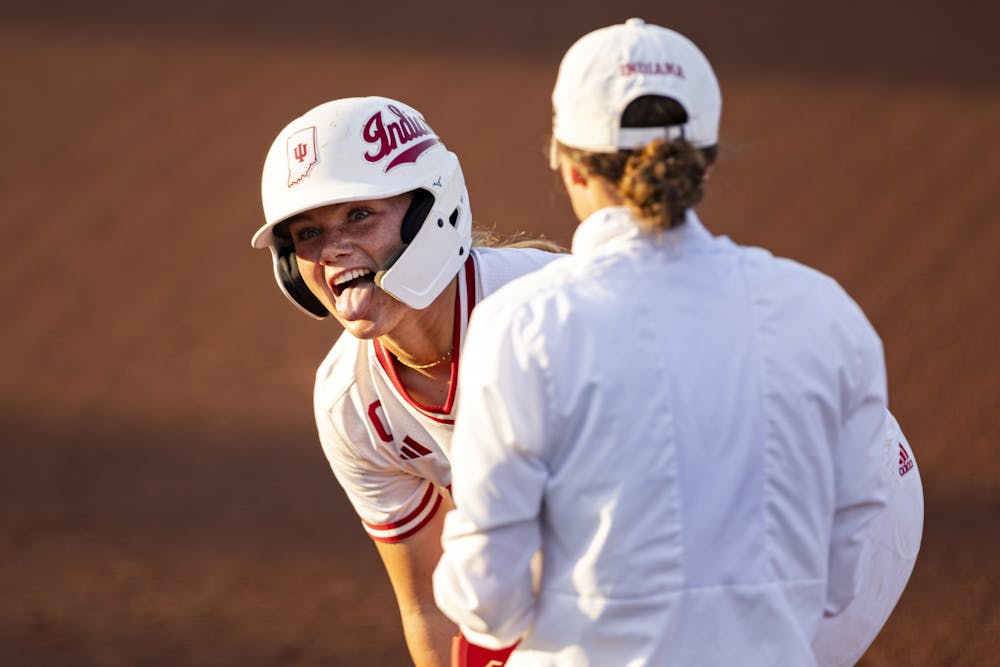
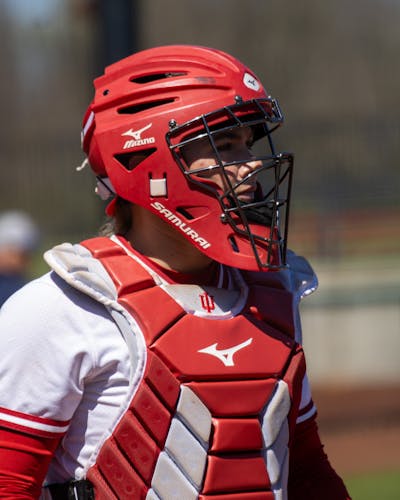
Avery Parker crouches behind home plate, clad in her all-crimson Mizuno catcher’s gear. The Indiana softball team is locked in a 3-3 game in the bottom of the seventh in Louisville, three outs from extras.
The speedy Bri Despines stands on first after a leadoff walk. She’s a threat to steal, and Parker knows it. She punches the pocket of her catcher’s mitt, a consistent part of her pre-pitch routine, as the first pitch fades off the plate, low and away.
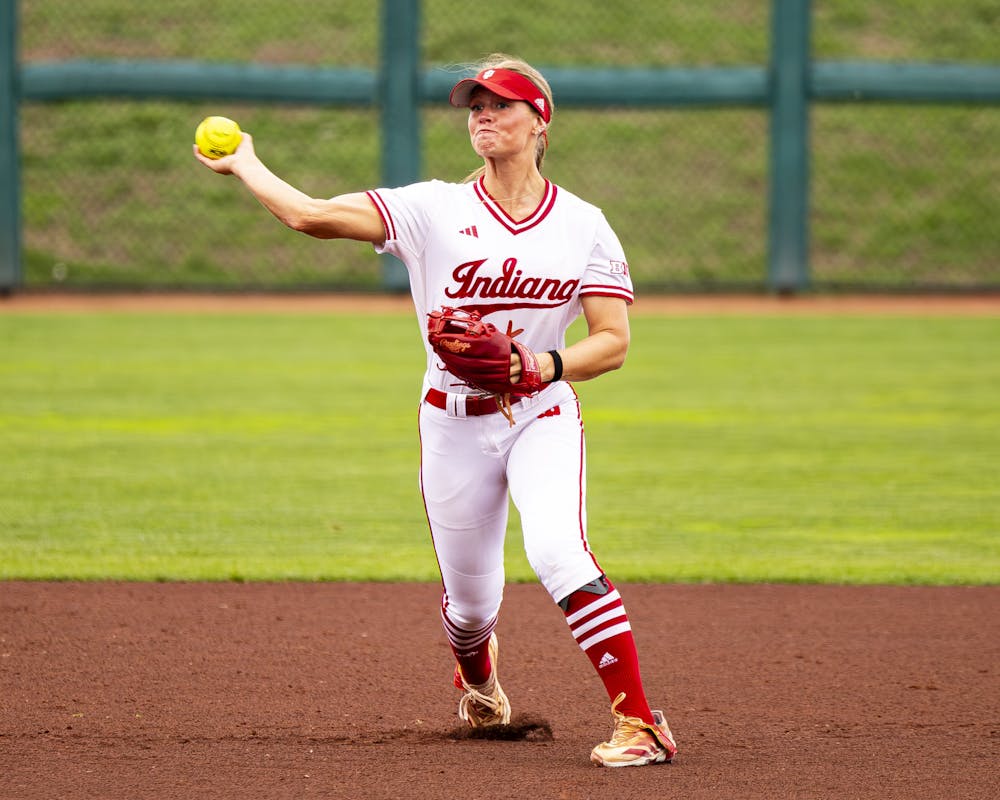
Despines takes off. Parker snares the pitch and fires down to the bag, where Alex Cooper is waiting. The throw is inch-perfect—Cooper doesn’t have to move. She applies the tag. The umpire’s emphatic punch follows. One away on a routine play the two have connected on hundreds of times.
Moments like this aren’t created overnight. It’s the accumulation of unseen work that leads to critical 2-6 putouts in late-game scenarios. For Parker and Cooper, it isn’t just a play they’ve rehearsed. It’s the product of years of persistence, support systems that never wavered and development paths that, while slightly different in shape, led them to the same place.
__________
Coming up in big moments isn’t atypical for either player. It shows up in their own performances. Just as often, it shows up when the spotlight is pointed on someone else.
When freshman Josie White comes through with a pinch-hit single to score two runs to all but seal a rivalry win over Purdue, Parker’s excitement is evident through screams and fingers points towards her younger teammate, a shared celebration of someone else’s achievement. Cooper follows suit, her grin a mile wide.
In moments like this, production — and along with it, expectation to perform — takes a back seat. What really matters is their presence.
“She could sub in on a new team and they’re instantly her people,” Cooper’s mom, Kimberly, said of her daughter’s knack of making others feel seen.
The talent is clear. So is the undying devotion to improve and the ability to execute, exactly the blend that Indiana head coach Shonda Stanton values most. “When you put intellectual capital with a massive work ethic, good things are going to happen,” she said.
As a result, Cooper and Parker have become more than just box score contributors on the field. They’re a steady presence in a program dependent on consistency off the field, too.
Somewhere between the midnight drives, imitating older players and the hiccups at recruiting camps, the foundation was built.
__________
Off in foul territory, 2-year-old Alex Cooper dons a purple glove larger than her head, clutching a matching purple ball. Her older sister, Madison, is working through a pitching lesson in Mooresville, Indiana — wind up, stride, whip and throw, repeat. Alex, as if a mirror of her sister, mimics the motion herself. Wind, stride, toss, repeat.
Cooper wasn’t really given a choice. “She was around softball from the day she was born,” Kimberly said.
Madison resets. Without any prompt or encouragement, so does her mini-me.
“She was always off to the side, mimicking what was going on,” John Cooper said of his youngest. He’d crouch behind a makeshift home plate, catching throws which, over time, picked up speed. Eventually, he stepped aside. Alex was throwing harder than he was comfortable with.
Even then, she wouldn’t let up. Imaginary pitches, mock swings, anything to keep her mind on the game. Long before she understood the game, she was rehearsing it. It was enough to earn her a nickname: Little Jennie Finch.
Cooper’s foundation was built through early exposure, lending valuable brain space to the game from a young age.
A short drive up I-465 in Westfield, Indiana, Parker’s introduction came later.
Before dugouts and diamonds, Parker shuffled through different activities. Tumbling came first. She tried her hand at soccer and basketball, but her short attention span prevented her from sticking to any one thing. “She was always moving from one thing to the next,” mom Carson recalled. Still, her parents saw potential.
Softball came when she was 9, almost 10. Rec league came first, where learning the game superseded playing with communal equipment and no real expectations. It was, in Carson’s words, a trial run.
“When she started, I said I’m not buying you anything until we get through a season,” Carson said. She wanted to see how long Parker would last. If she wanted her own bat and glove, she’d have to see it through.
At first, there wasn’t much to suggest that she would.
“She was so bad,” Carson said, laughing. “She would get up to bat and I was like, this is great. I don’t have to worry … I can just sit here and relax.” Defense revealed more of the same. A perfect fit for the stereotypical right fielder, she was placed out there where she could do no harm.
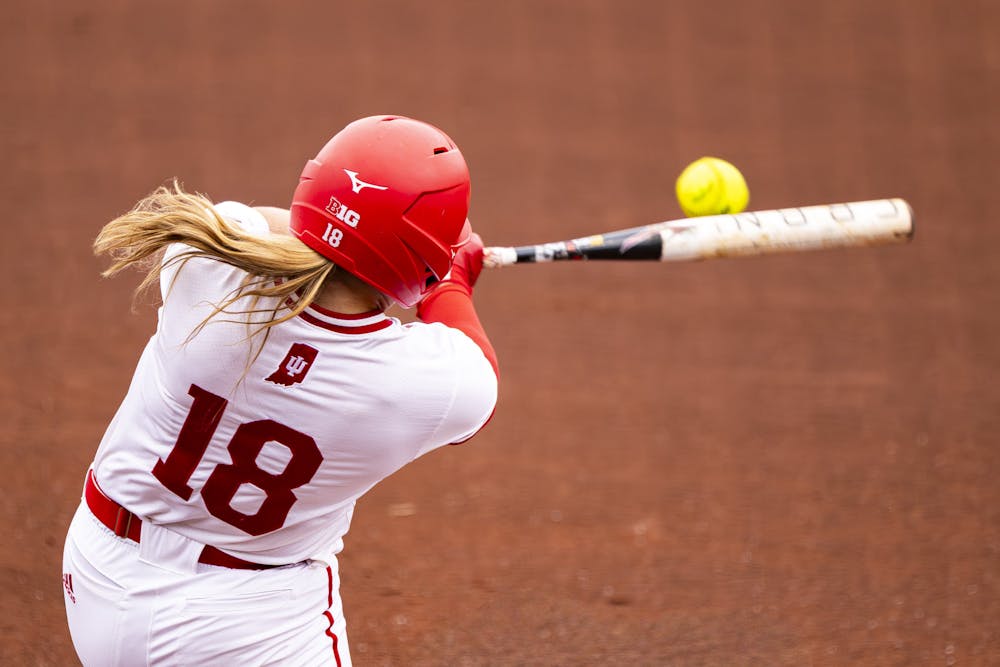
Slowly, the game started to come to Parker. The ball bounced off her bat with ease. The potential her parents had always seen began to show itself. It was a different development arc from Cooper, but both were finding their footing.
What came next pushed softball beyond those early fields and into something that slowly began to shape their lives.
___________
In the backyard of a new home, strange noises echoed through the neighborhood.
Parker, wearing catcher’s gear for one of the first times, her interest in the position just now blossoming, stood ready. About 40 feet away, her brother Aidan set down a bucket of tennis balls, stepped in and started throwing.
There is no aiming. Only velocity.
The first whistled past Avery’s head, inches from making contact. The next thudded off her chest protector. The next pinged off the mask shielding her face. With no mitt in hand, the goal wasn’t to learn to catch right away.
“He just wanted her to get used to being hit,” Carson recalled. There was plenty of screaming. Tears, too. Parker, not yet understanding the lesson, refused to settle in.
Eventually, the lesson landed. It began like a lot of things for Parker—with family, and a willingness to pour themselves into her.
Neither Parker nor Cooper could’ve made it to now without the sacrifice of their closest cohorts. An investment made less with money and more with time. To this day, missing games is a rarity. Wouldn’t feel right.

“That’s been our life for the last 10, 12 years, watching her go play ball,” John said.
At first, it was short drives to local tournaments. Soon, the miles stacked up. Maryland, Tennessee, Colorado, Ohio — softball took them everywhere. Summer vacations became rare; road trips to tournaments took their place.
Thursdays to the wee hours of Monday morning were spent on the road. Then it was back to work the next morning. Despite little time off, it never felt like a sacrifice.
“We got tired, but we never got tired of traveling for softball,” Kimberly said.
Each family’s travel logistics looked different. With their eldest already independent, Kimberly and John would travel with Alex, building their schedules around tournaments and travel. The Parkers alternated weekends, rotating who traveled and who stayed back to look after their other two children.
The details were different, but the outcomes were the same. Over time, the investment stopped standing out. It just became a part of how Cooper and Parker got to where they were going.
Eventually, all the miles traveled turned into something more substantive: exposure.
Coaches watched, moving in silence from field to field, clipboards in hand, stopwatches at the ready. While the setting remained the same, the stakes were changing. Even when sharing the field with future Division I players, Parker and Cooper began to separate themselves.
___________
Neither Cooper nor Parker got off to a great start in the recruiting circuit.
With college coaches in attendance, nothing went unnoticed. Three different ground balls headed towards Cooper at shortstop. Three different times, the ball slipped past her.
Doubt began to creep in. She walked off the field, her usual smile wiped away.
“She came off the field like, I’m not going to play anywhere,” Kimberly recalled. Which simply wasn’t true. As soon as she started attending camps at IU, the coaching staff had her name circled and underlined. “She was a must get,” head coach Shonda Stanton said.
The relationship was built right away, working to learn more about who Alex was as a person, probing for a way to stand out. Eventually, they found it.
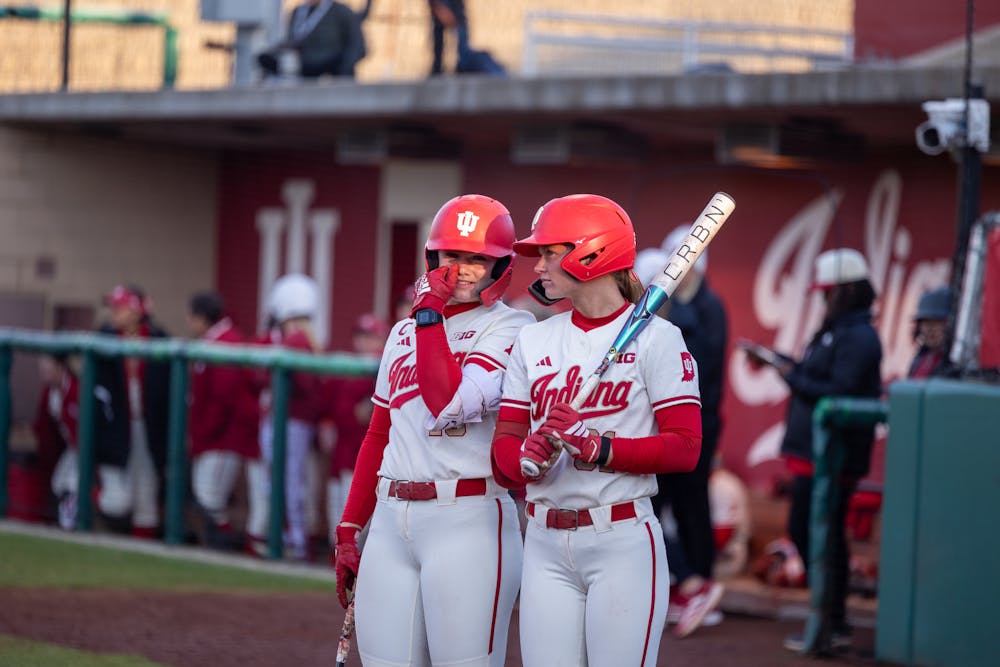
While checking in for Alex’s official visit, the Coopers found their name tags. Alex, John and Kimberly. Not Kim. Some other schools put Kim. That’s not her name, and IU had paid attention.
“They got to know my family and the people that I love, which was something that meant so much to me,” Cooper said, reflecting on her recruiting journey.
Parker’s first opportunity in front of the Indiana staff stalled just as quickly as it had started. During a baserunning drill, Parker slid into a bag with an outstretched arm. Immediately, something wasn’t right. When she returned home, she told her parents she may have broken her hand.
Yet, these moments didn’t derail their recruiting journeys.
That night, Parker’s phone rang. It was Shonda Stanton. Not yet allowed to communicate directly with recruits, she’d gotten special clearance from the NCAA compliance office to check in on the injury. It was a gesture that made a mark.
“It made an impression on me that this coach went out of the way to talk to compliance,” Carson said. “That’s the kind of coach that I want my kid playing for.”
Indiana wasn’t the only school taking notice. Several other Big Ten programs loomed, trying to jockey their way into landing Parker. Indiana’s focus remained steady, reflective of their desire to keep the best in Indiana at home.
Stanton and her staff made their interest clear right away. At 12:01 a.m. on Sept. 1, the first day coaches are allowed direct contact with players, Parker’s phone lit up. Indiana was on the other end.
The early connection proved crucial during a recruiting cycle dominated by a global pandemic. The foundation was already laid. Throw in proximity to home — to family — and the choice wasn’t all that difficult.
Parker’s path was shaped by early connection, while Cooper’s was formed through consistency — two different paths that resulted in the same decision.
___________
It’s a balmy Saturday afternoon in Bloomington. Purdue is in town as Cooper and Parker strap on their elbow guards and slide their batting helmets over their heads to take their first at-bats of the day.
Kimberly and John look on from their red stadium seats five rows up just behind home plate. In the bleachers to their right sits a team of U11 softball players. Some stand up, their small hands clutching the netting that separates them from the field of play, Cooper just feet away in the on-deck circle.
Kanye West’s “God Is” streams out of the stadium sound system as Cooper steps in into the left-sided batter’s box. Parker takes her place in the on-deck circle.
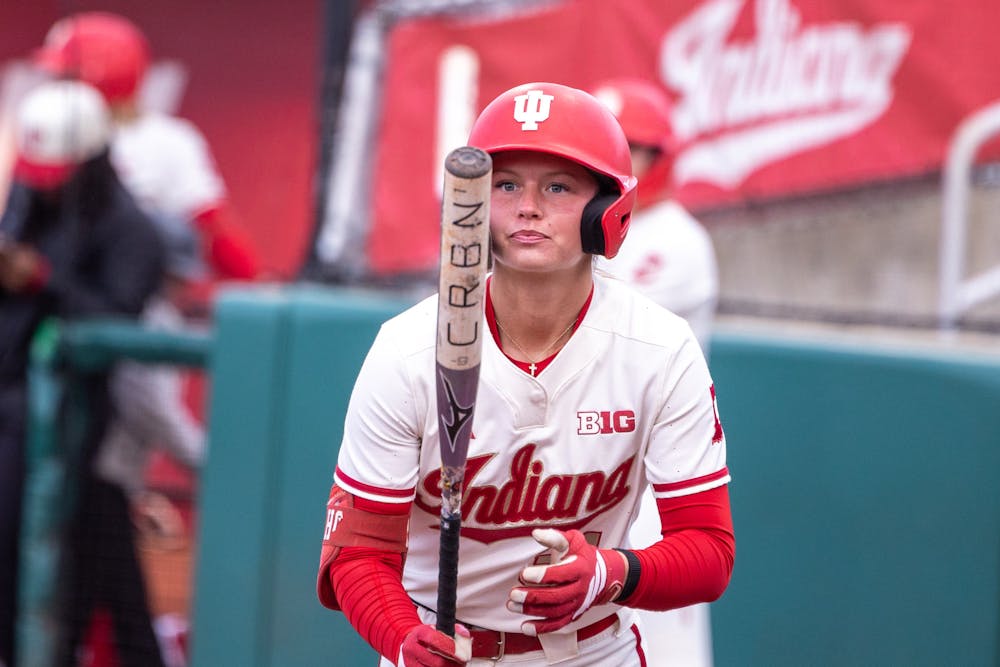
The first two pitches come in, a ball then a strike. Cooper steps out, turns briefly and drifts a few steps towards the little ones. She offers them a subtle, closed-lip smile, almost absent-mindedly. To her, it’s a quick mental reset. To them, it’s everything. Some turn to each other and giggle, as if they were living a dream.
Cooper steps back in. Years ago, she was the young girl watching on. Now, they’re watching her.