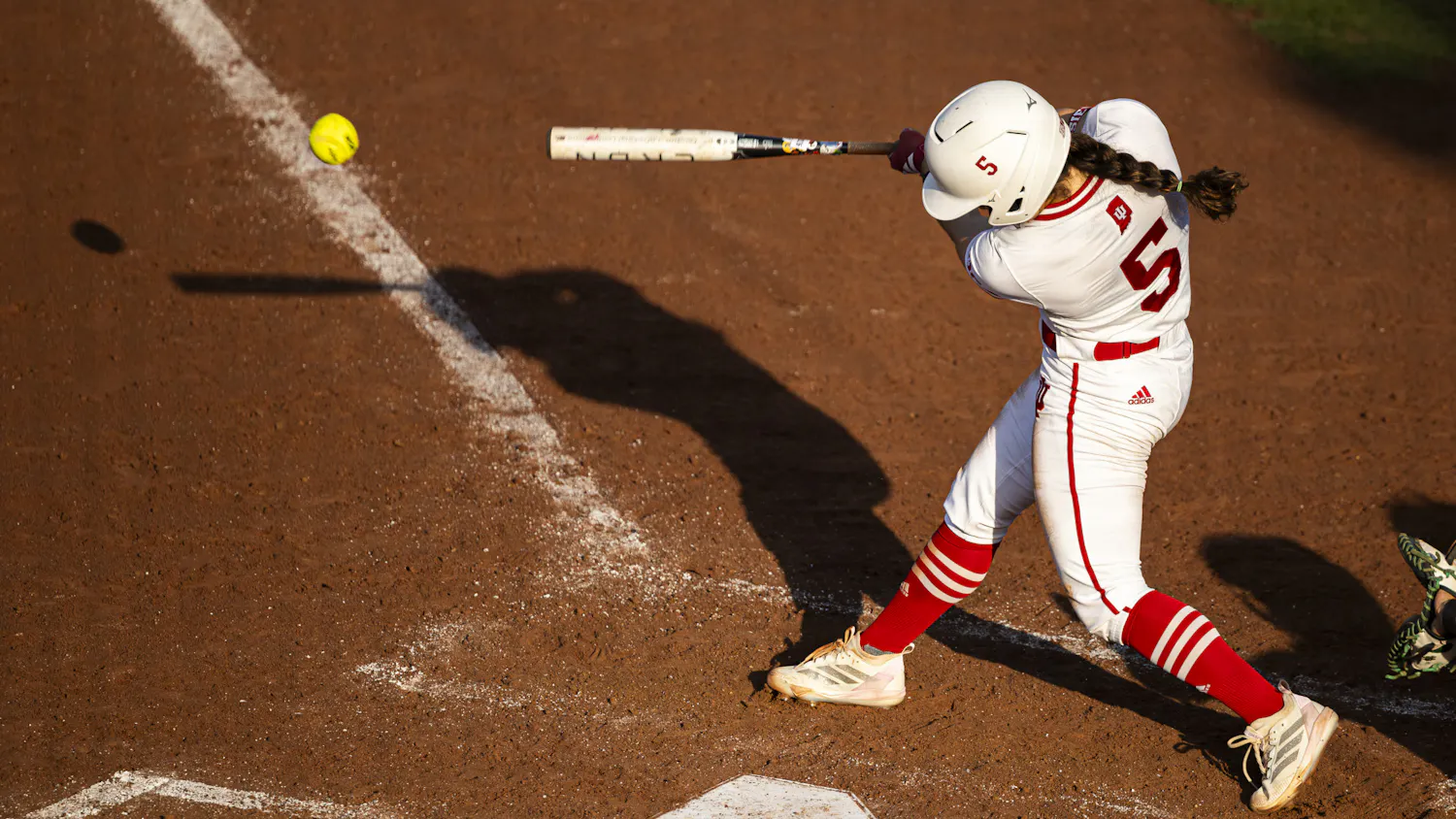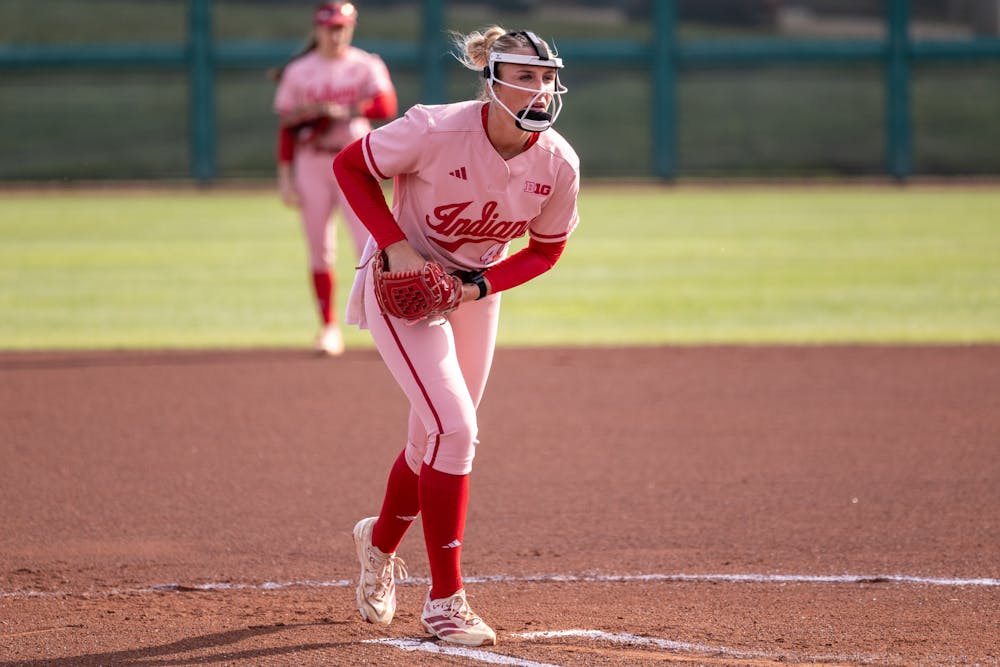
Amidst their journey across time zones, the No. 16 Oregon Ducks agreed to meet the Indiana Hoosiers on Andy Mohr Field for a non-conference contest the day after each team concluded a road weekend series. Although both teams represent the Big Ten conference, the game was not a part of the league’s season schedule and instead arranged by the two coaching staffs.
Almost definitely, the game played out far differently than either coaching staff anticipated when it was scheduled. Seven innings lasted almost four hours and contained 36 combined runs, with Oregon emerging victorious by a score of 24-12 against six different Indiana pitchers.
“We weren’t able to find an answer,” Indiana head coach Shonda Stanton said after the game.
Freshman Aubree Hooks pitched three shutout innings in her start in the circle for the Hoosiers, and Indiana led 7-0 with substantial run support from Josie Bird’s home run and Ellie Goins’ grand slam.
Suddenly and then irrepressibly, Oregon set off an offensive avalanche soon after.
An error at first base allowed sophomore Stefini Ma’ake to reach, stepping on the bag moments before Bird could with the ball in her glove. Redshirt sophomore Ayanna Shaw promptly singled and stole second base to put a pair in scoring position, in time for Braiesey Rosa to drive both home with a single of her own.
Hooks walked one more batter, and despite her strong start, was subsequently removed from the game.
The Indiana dugout, inspired by the possibility of springing an upset, sent out its most reliable arm in Ella Troutt in her wake. Indiana’s situation shifted from bad to much worse after the exchange.
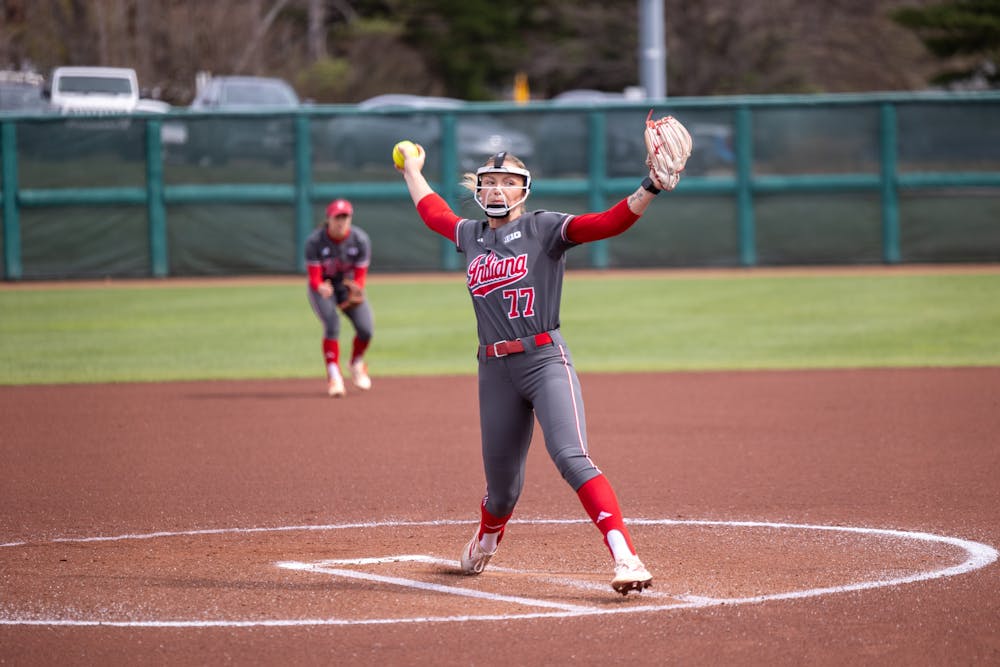
With two runners already on base and little time to settle in, Troutt walked her first batter. The lineup card then flipped over and scored on four consecutive at-bats, pouncing on Troutt’s fresh arm and tying the score in the process.
So, in response, Indiana made a second pitching change at the outset of the fifth frame.
Redshirt junior Taylor Hess attempted to dispel the damage, but the first batter she faced doubled and Oregon scored four runs in total. Hess returned to the dugout before the fifth inning’s conclusion, as junior Brooke Mannon took her place to record the final out.
Indiana made three more pitching changes in the final two innings, cycling through all six pitchers on the roster and even asking Hooks to reenter the action after starting in the circle. Through the three additional exchanges, Oregon plated 13 more runs to reach its total of 24.
There was a plentiful amount of foul balls with two strikes, creating multiple double-digit pitch at-bats, many of which resulted in a walk. Either way, no matter which portion of the Oregon lineup Indiana faced, there was simply no place to put the ball.
If a pitch soared too close to the center of the zone, it was at risk of yielding an extra base hit blast. Oregon hit three doubles, a triple and four home runs on the day. If a pitch strayed too far outside, it was often either called a ball or simply slapped into foul territory to preserve the offensive opportunity.
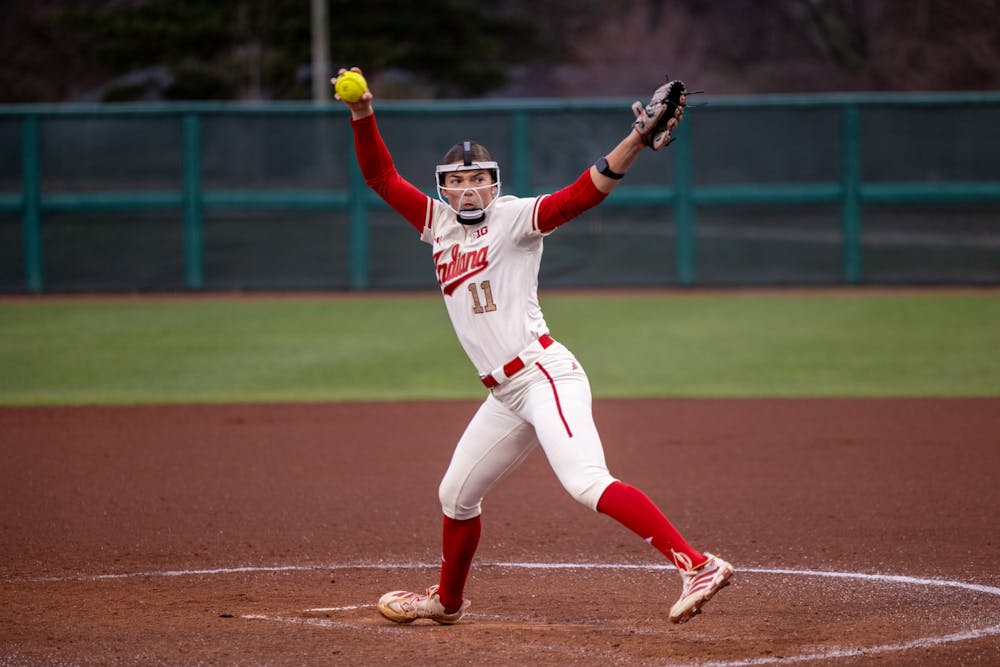
Oregon threatened to make contact, reach base and score runs regardless of the location of a pitch to the strike zone. Relatedly, Indiana struggled with pitch control. The home team’s pitching staff entered the contest with the second-fewest walks per innings pitched in the Big Ten, but uncharacteristically walked nine batters while only striking out four.
After the game, Stanton spoke on the struggle to consistently throw strikes.
“You fall behind in a count,” Stanton said, “it doesn’t matter the hitter, on our side or their side, you’re going to pay as a pitcher.”
Indiana certainly paid for its inability to establish authority early in at-bats and record outs early in innings. Oregon sent 53 batters to the plate, with 29 reaching on either a hit or a walk.
Weather and fatigue may have also played a role in the uncanny output of both offenses. A chilly evening at Andy Mohr Field featured plenty of blankets and winter coats in the stands and in each dugout.
On top of that, both teams were playing their fourth game in as many days. Indiana spent the weekend in College Park, where it swept the Maryland Terrapins, while Oregon escaped a scare against Purdue in West Lafayette.
However, after the game, Stanton suggested that fatigue and travel shouldn’t have significantly factored into the 36-run equation, at least for Indiana’s defense.
“We’re fortunate that we have a pitch by committee,” Stanton said. “Nobody should be gassed or tired at this point in time. I do think mentally, sure, playing four in a row, but that’s what it’s about. (Oregon) did the same thing.”
Whether fatigue and air temperature made an impact or not, Indiana crumbled in the circle and essentially wasted its lineup’s outstanding 12-run day.
“For most teams on our schedule,” Stanton said, “if we put up 12 runs, we’re going to win a ball game.”
The Hoosiers had scored 12 or more runs in seven games this season before doing so against Oregon. They won each and every one of those games, marking Monday’s defeat as one of more devastating losses of the year.
Fortunately for Indiana, the bad beat occurred in a preferable portion of the calendar. Indiana stays in Bloomington this week to host Detroit Mercy on Friday and Saturday, without a midweek game on next week’s schedule.
The pitching staff has plenty of time to rest and recover before its Easter weekend trip to No. 7 UCLA, with a prime opportunity to regroup and reset this weekend in a pair of non-conference contests.
Nonetheless, Oregon’s obliteration of its hosts provides Indiana with plenty to look back upon and learn from as the weather begins to warm up. If Indiana is to improve upon its postseason performance from a season ago, the pitching staff must prove to be capable of competing with the lineups of ranked opponents like Oregon.
Perhaps this non-conference test, which Indiana added to the schedule unnecessarily but enthusiastically, will be what provides the Hoosiers with a pivotal pitching wake-up call.