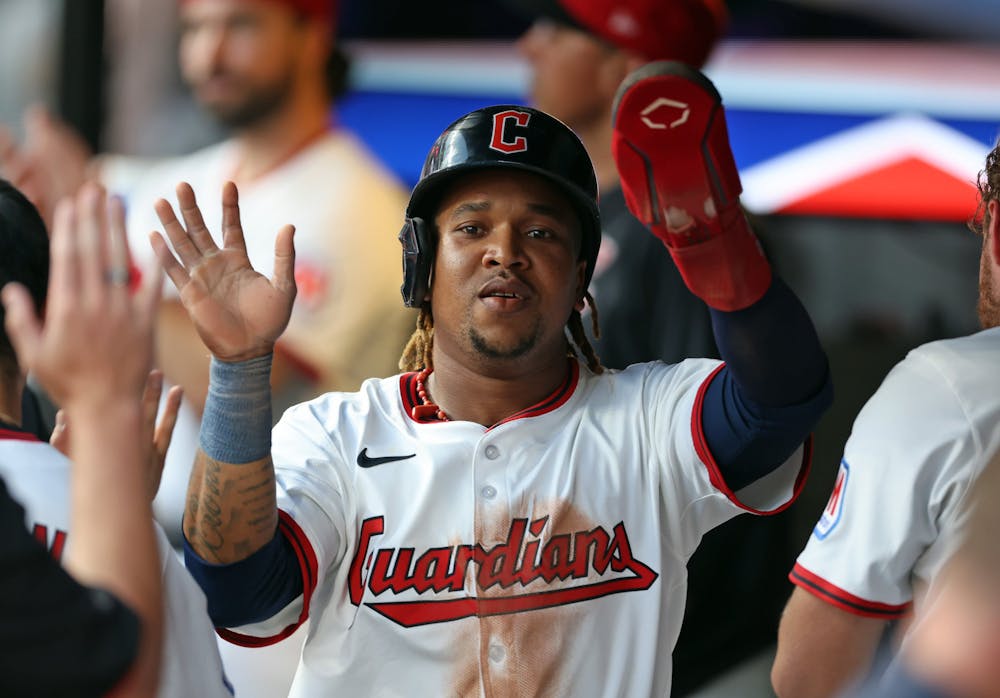
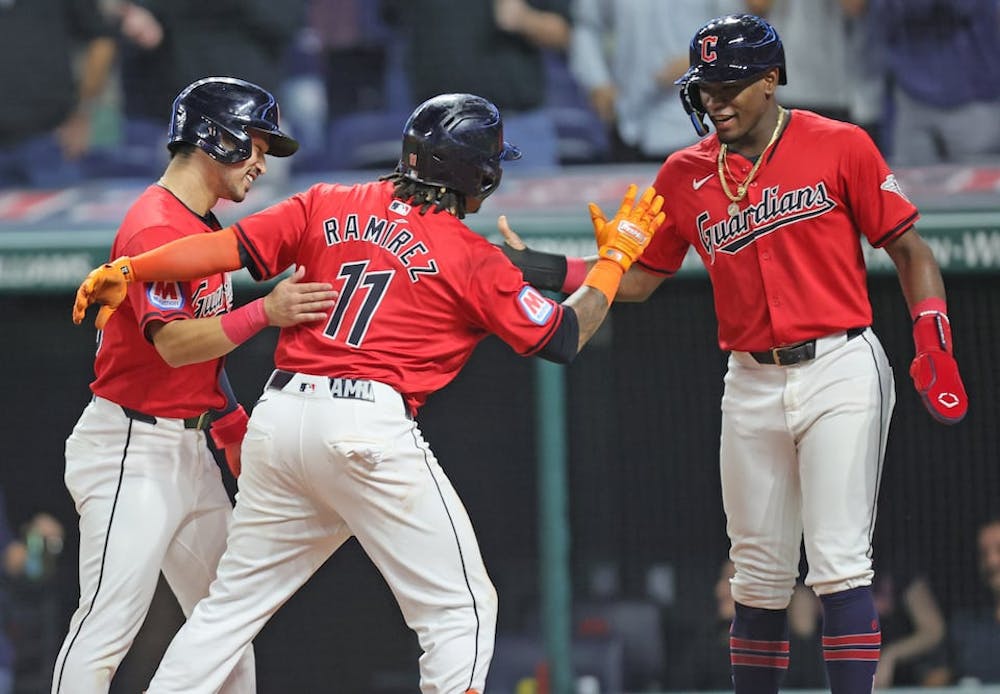
In January 2026, the Cleveland Guardians did something they rarely do: spend money. José Ramírez, a future MLB Hall of Famer and the face of the organization, inked a seven-year, $175 million extension. For the city of Cleveland, it’s a massive victory that keeps Ramírez in Progressive Field for the rest of his career. Once again, Ramírez took a hometown discount, deferring $70 million to give the front office some flexibility to chase more players in free agency.
Looking at the 2026 Opening Day roster, a real question has to be asked.
Flexibility for what?
The Guardians enter the 2026 season with a projected payroll of $94 million, ranking 29th among the 30 MLB teams. Across the MLB as a whole, the league's average is climbing toward $170 million, with squads including the Los Angeles Dodgers and New York Mets spending upwards of $370 million.
For over 25 years, the Dolan family has controlled primary ownership of the Cleveland Guardians. Larry Dolan purchased the team in 2000, and later shifted ownership to his son Paul in 2013. The Dolans have controlled the team during some of the organization's best years. Since 2013, the Guardians have had the fourth-most wins in Major League Baseball. They’ve won eight AL Central titles, an American League Pennant and appeared in the World Series under the Dolan leadership.
The organization’s success isn't a fluke; it's the result of a front office and coaching pipeline that has created a winning culture. Under the Dolans, Cleveland has consistently hired and retained elite talent, from the front-office brains of President of Baseball Operations Chris Antonetti and General Manager Mike Chernoff to the dugout leadership of future Hall of Famer Terry Francona and his successor as manager, Stephen Vogt. This leadership has transformed the franchise into a pitching factory, seemingly conjuring Cy Young winners Shane Bieber and Corey Kluber and other perennial All-Stars such as Trevor Bauer and Emmanuel Clase from thin air.
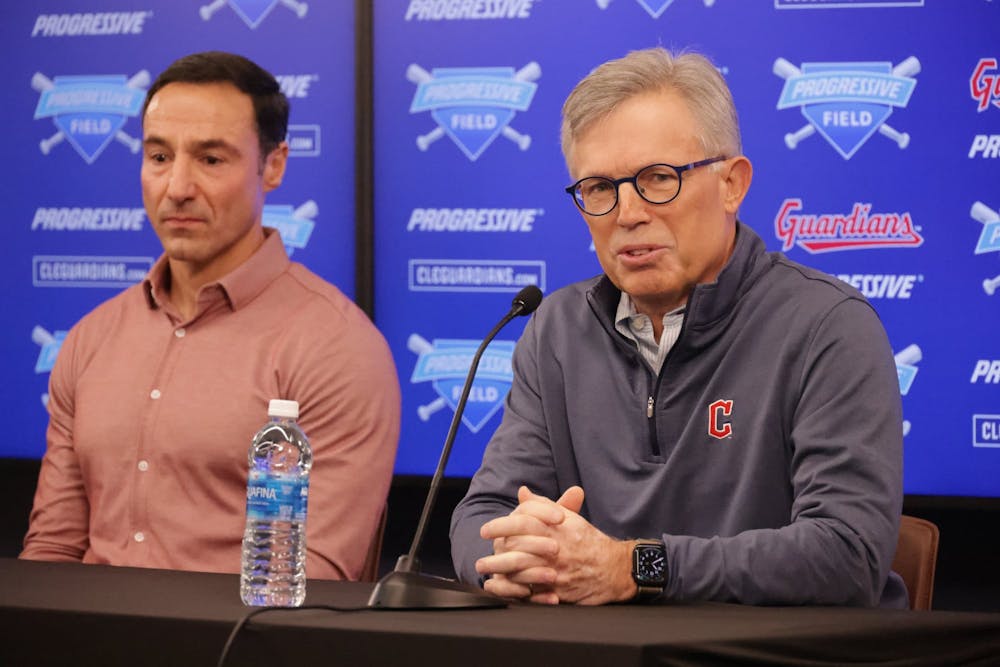
Antonetti and Chernoff are some of the best executives in all of Major League Baseball. The duo has been working together in the Cleveland front office for over 23 years. The Cleveland Guardians are viewed as a perennial contender in the American League. The organization has more wins over the past 14 seasons than the New York Yankees, Boston Red Sox, Chicago Cubs and New York Mets. For reference, those four teams combined have spent an average of $2.2 billion more than Cleveland in that window.
The Cleveland Guardians aren’t a typical small-market team. They win.
Paul Dolan often points to Cleveland's market size as a reason for the $94 million payroll ceiling. But the math tells a different story. The Milwaukee Brewers, operating in a city 30% smaller than Cleveland, found a way to spend $130 million. The Kansas City Royals, in a near-identical market, are pushing toward $180 million.
The issue isn't that Cleveland is too small to spend; it’s that the current ownership is the only small-market club still acting like it’s the turn of the century.
When the Dolan family took over the organization in 2000, the average payroll was $94.5 million. Twenty-six years later, the Cleveland Guardians organization has remained a frugal franchise regardless of on-field success. Imagine this front office with a top-15 payroll. Imagine a world where Antonetti and Chernoff didn’t have to trade superstars Francisco Lindor, Corey Kluber, Shane Bieber, Josh Naylor and Michael Brantley because the checkbook was closed.
Since 2010, players traded by Cleveland for what appeared to be financial reasons have gone on to sign contracts worth over $1.2 billion combined with their new teams. The talent is built and developed in Cleveland; the capital to keep it is not.
It is hard to tell a fanbase as passionate as Cleveland Guardians fans to be patient. It has been over 78 years since Cleveland last won the World Series, the longest active championship drought in all of Major League Baseball.
Paul Dolan has no room to calm down the agitated fanbase. While his checkbook remains closed for the roster, the public’s wallet has been wide open. The Guardians recently secured a lease extension through 2036, a deal tied to over $200 million in renovations to Progressive Field, the vast majority of which is funded by taxpayers. This poses a new question: If the public is funding a venue to ensure the team remains in Cleveland, there is a reasonable expectation that ownership will maximize the product on the field.
There is a sliver of hope for Cleveland, in the form of minority owner David Blitzer. Blitzer is an owner of the Philadelphia 76ers, Washington Commanders and New Jersey Devils. He’s also a partial owner of Crystal Palace, Jupiter Links Golf Club, Kansas City Current, Real Salt Lake FC and Joe Gibbs Racing.
Blitzer holds a path to majority control of the team in 2028. He was crucial in negotiating with Ramírez, as the understanding is that Blitzer will invest in the team, its young core, and its fans. For the loyal fans, 2028 seems like a lifetime away. Ramírez is already 33 years old; it is now up to the management to give the potential Hall of Famer a proper send-off.
The young core of Gavin Williams, Tanner Bibee, Chase DeLauter and 2024 first overall pick Travis Bazzana is ready to win right now. Every year the fans wait for an ownership change is a year spent risking the same fate as the Lindor era.
Real Cleveland Guardians fans remember Paul Dolan’s infamous 2019 quote regarding Lindor.
“Enjoy him.”
Dolan suggested one of baseball’s best players and fan favorites in Cleveland wasn’t going to be playing in his home ballpark of Progressive Field much longer because he didn’t want to pay the money to re-sign him. Lindor was subsequently traded to the New York Mets the following offseason, where he signed a $341 million extension. Lindor’s contract is worth more than double any contract the Cleveland Guardians have ever offered as a franchise.
The issue isn’t just that the Guardians won’t spend money to better the team. The organization is consistently forced to make roster changes to avoid increasing its payroll. Following a magical run to the 2024 American League Championship Series, a normal franchise would have looked to add that one missing piece in free agency to push them over the top. Instead, Paul Dolan chose that moment to disband a fun young group.
To save roughly $30 million in projected 2025 payroll, the front office was forced to ship off All-Stars Naylor and Andrés Giménez. It was a Cleveland fire sale disguised as a push to get younger. There is no excuse for a team coming off an ALCS run to be outspent by almost every team in the league. The Guardians shipped game-winning production for younger, cheaper prospects who the organization controls for many years to come.
Paul Dolan has a consistent cycle: as soon as a homegrown player becomes too good to be cheap, they become too expensive to keep.
Ramirez has done his part. He has given Cleveland his career loyalty since he was 17, and hundreds of millions of dollars in discounts. The front office, led by Antonetti and Chernoff, has done its job by hiring, outdrafting and outdeveloping teams with triple their total payroll.
The fans? They have done their job. Progressive Field is a tough place to play in October. They show up, are loud for every pitch, and they pour their hard-earned money into watching their beloved organization.
The one who hasn’t stepped up to the plate?
Paul Dolan.
Since the turn of the century, the Dolans have treated the Guardians as a steady investment rather than a competitive sports franchise. The Dolans have taken advantage of the rapid growth in MLB valuations while keeping the payroll in the basement. The Dolans prioritize personal wealth preservation over aggressive team investment, and it has led the franchise to reach a standstill.
Cleveland doesn’t need a stable owner who is content with 90 wins while operating at a fraction of the spending of other contenders. They need an owner like David Blitzer to step in and make the financial contribution necessary to assure more pennants and potentially bring the Commissioner’s Trophy to Cleveland for the first time since 1948.
If Paul Dolan isn’t willing to fully invest in this organization and bridge the gap from a consistent contender to a world champion, then there is a simple solution.
Step aside. Accelerate the transition. Sell the team.


