When you ask a non-hockey fan what country is the greatest for hockey, the answer is almost always Canada. Even when you ask hockey fans from countries heavily invested in the sport, most of them will tell you that The Great White North are the kings of hockey.
Canada has dominated Olympic hockey, as the men’s team has won three times with NHLers on the roster, while the women’s team took home four consecutive gold medals from 2002-2014 along with another gold in Beijing in 2022.
The United States has often been in Canada’s shadow hockey-wise throughout history. Canada has had the better of the USA in international competition. Sidney Crosby’s famous “golden goal” gave Canada men’s hockey the gold medal over the USA in 2010, while the women up-north have beaten the Americans four times in the gold medal game since 2022.
The 2026 Winter Olympics in Milan, had NHL players compete in the Olympics, the first time the NHL has been a part of the winter games since 2014, making it a truly best-on-best competition.
Both United States teams entered Milan with revenge on their mind. Just twelve months prior, the men’s team lost to Canada in the inaugural 4-Nations Face Off, as Connor McDavid scored the overtime game winner in the championship game in Boston, Massachusetts.
Meanwhile, the women, after triumphing in Pyeongchang in 2018, handed the gold medal right back over to Canada in 2022.
If it hasn’t been made clear by now, the hockey rivalry between the United States and Canada is extremely intense, and it’s only getting more heated as each year passes.
It’s safe to say that 2026 was the most anticipated Olympics in United States hockey history, especially considering the return of the NHL and its players to the games.
To say that the two teams had differing paths to the gold medal game would be the understatement of the year:
Women’s Team
Head coach John Wroblewski and the women’s team absolutely crushed all of their competition en route to the gold medal game. This included a 5-0 slaughtering of Canada in the preliminary round.
Through the first six games, the United States outscored their opponents 31-1. It was absolute domination from captain Hillary Knight and company.
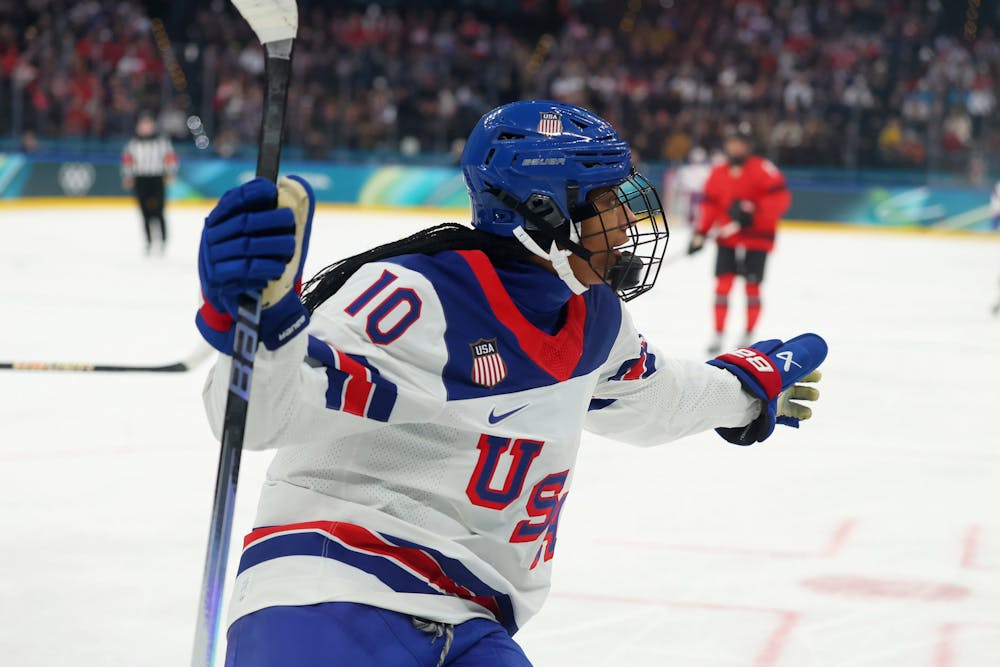
Defenseman Laila Edwards made history as the first African-American woman to play for the United States women’s hockey team in the Olympics. She recorded two goals and six assists in Milan.
Goaltender Aerin Frankel accrued a ridiculous .979 save percentage across her two weeks in Northern Italy, only surrendering two goals for the entire tournament.
The United States beat Sweden in the semifinals, 5-0, to advance to the gold medal game, a rematch with Canada.
The 2026 games represented the fifth consecutive time the two North American rivals met in the gold medal game. Wroblewski and company were massive favorites to recapture the gold medal heading into the matchup.
However, the USA was caught off guard by a fierce Canadian effort, and it was the first time in Milan that the red, white and blue were heavily tested.
Canada took a 1-0 lead early in the second period, as Kristin O’Neill beat Frankel on a breakaway shorthanded goal. This was only the second goal Franklin had surrendered in Milan, and the first time the Americans trailed in the tournament.
The first 55 minutes were non-eventful for the stars of the USA. Hilary Knight and the rest of the ferocious offensive attack were held quiet, as Canada safeguarded the net, allowing few high-quality chances. Frankel was unbelievable in net, making save after save to keep it a one goal game.
With just over two minutes to play, Frankel was pulled for the extra attacker. It was do or die for the United States, as they were an empty net goal away from having their dreams shattered.
Finally, with 2:04 left in the gold medal game, Knight deflected a Laila Edwards shot home to tie the game at one on the six-on-five advantage. The five-time Olympian, who may have been playing in her final Olympics, picked the perfect moment to have the biggest goal of her career.
The game would go into overtime, with the momentum shifting toward the Americans.
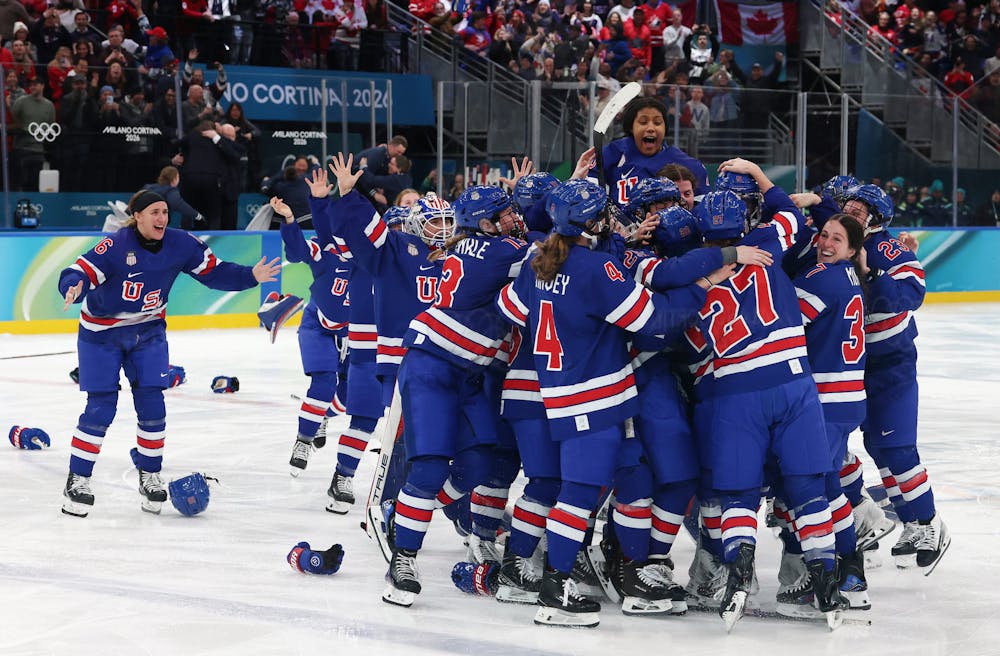
Just over four minutes into the 3-on-3 overtime, defenseman Megan Keller found herself on a breakaway to the net. The 3-time Olympian backhanded it home to win the game for the United States.
It really was the perfect story. The 2026 United States women’s hockey club was the best in team history, with stars all over the ice. They dominated the first six games, were tested for the first time in the seventh, and showed tremendous resiliency.
Caroline Harvey, a defenseman from the University of Wisconsin-Madison, won the MVP for her performance in Milan.
Men’s Team
On Feb. 22, 1980, a monumental moment in United States sports history occurred. In Lake Placid, New York, the United States men’s hockey team, largely consisting of amateurs, defeated the Soviet Union juggernaut in what many people know today as the “Miracle on Ice”.
A few days later, those same amateurs defeated Finland to capture the gold medal on home ice.
Forty-six years later to the day of the “Miracle on Ice”, the United States would be playing for another gold medal, this time in Milan.
The 46-year stretch between Lake Placid and Milan was filled with heartbreak for the Americans. From Sidney Crosby’s “golden goal” in the 2010 Olympics to the 4 Nations Face-Off defeat in 2025, it was a four-and-a-half decade period of coming up a little bit short of total victory.
The 2026 Olympics featured the return of NHL players. The United States was led by captain Auston Matthews, the Tkachuk and Hughes brothers, along with Stanley Cup champions Jake Guentzel and Jack Eichel.
However, the United States didn’t exactly cruise to the championship game like the women’s team did. It took Mike Sullivan a couple of games to figure out his line combinations and who his starting goaltender was.
In the first game, the United States would be tied with Latvia after one period. In the second game against Denmark, goaltender Jeremy Swayman performed poorly, including giving up a goal from half-ice.
Smartly, Sullivan decided to roll with Connor Hellebuyck following Swayman’s showing against Denmark. The third goalie, Jake Oettinger, did not see any playing time in Milan.
The USA finished 3-0 in Group C play, earning an automatic bid to the quarterfinals, where they would face Sweden.
This was about as tough of a draw as the United States could have. Sweden, after underwhelming in group play, had to play in the opening knockout round in order to reach the quarterfinals. However, Sweden was also filled with NHL talent, and had previously won a gold medal with NHL players in 2006 in Turin, Italy.
After leading 1-0 for the majority of the game, Mika Zibanejad tied it for Sweden on a 6-on-5 advantage with under two minutes to go. The game was headed for overtime, one of three Olympic games that day that required extra play.
Quinn Hughes scored the game winning goal for the United States early in the 3-on-3 overtime, to send them to the semifinals.
After blowing out the Cinderella Slovaks, 6-2, the United States advanced to the gold medal game, where as expected, they would meet Canada.
Matt Boldy scored for the United States in the opening period, before Cale Makar responded with a goal for Canada late in the second period. It was 1-1 heading into the third.
The third period had hundreds of thousands in North America standing on the tips of their toes for the entire length of the period. Countless times, Canada came so close to scoring that illustrious second goal to put them in front.
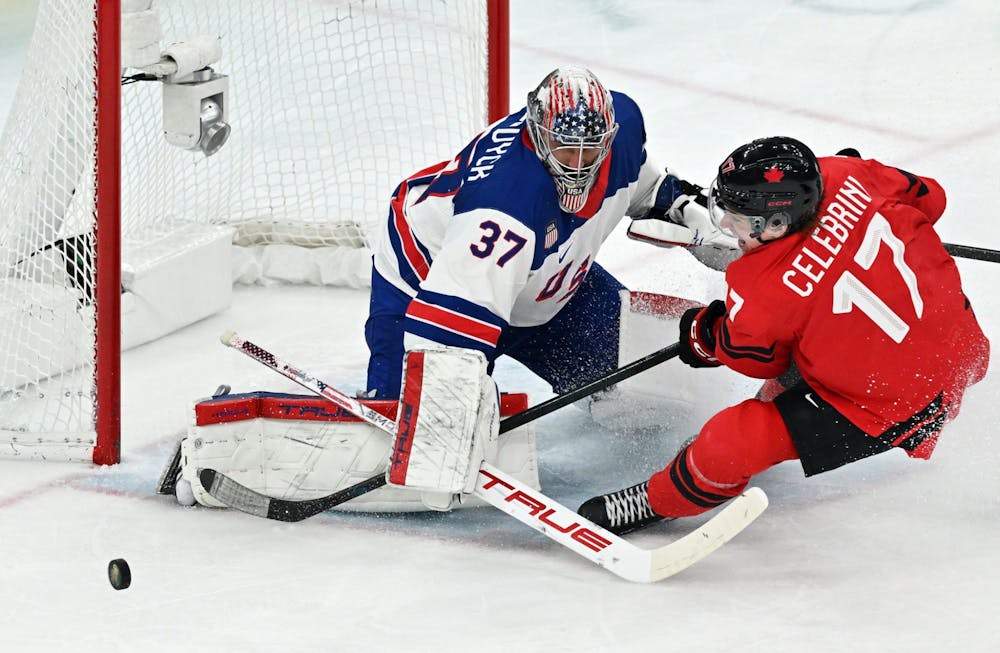
However, unaware to Canada before the game, they would be playing the gold medal game against an essential brick wall, otherwise known as Connor Hellebuyck.
Hellebuyck made a number of remarkable saves throughout the game, not just the third period. He stopped a Connor McDavid breakaway midway through the second period. Then, in the aforementioned third period, he reached his stick out, and, by some miracle, prevented Devon Toews from scoring on a wide open net.
After stopping 40 shots on 41 attempts, Hellebuyck and the United States were heading for overtime.
Jack Hughes, the younger brother of Quinn, made a tremendous play poking the puck away from Makar and down the ice into the Canada zone. Defenseman Zach Werenski lifted the stick of Nathan Mackinnon and had control of the puck at the side of the neck.
Werenski slid the puck across, and Jack Hughes’ shot went through the legs of Jordan Binnington into the back of the net. The wait was over.
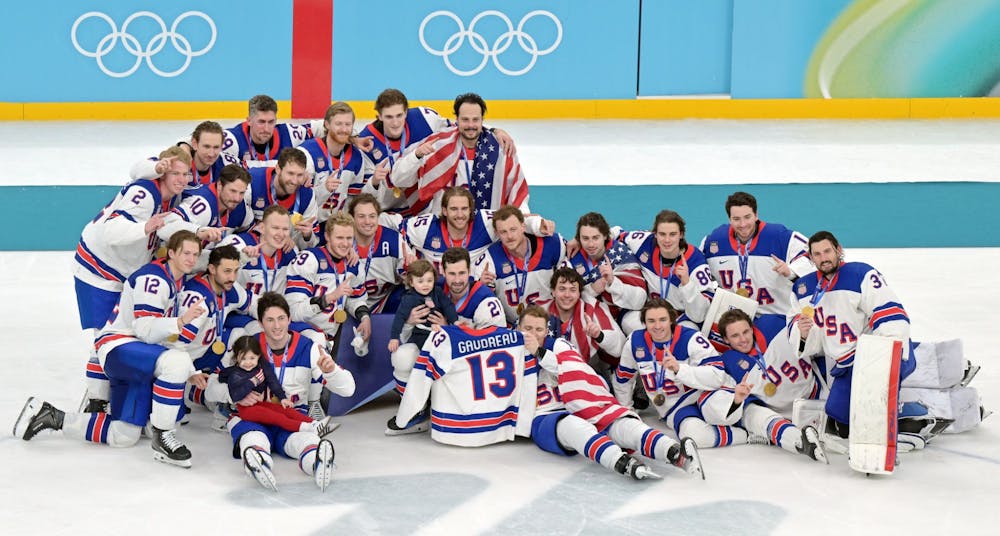
The United States had won gold for the first time since 1980, when Ronald Reagan was a month into his presidency.
2026 marked the first time ever the United States had completed a clean sweep of hockey at the Winter Olympics.
Following the “Miracle on Ice”, participation in youth hockey skyrocketed in the United States. I’d expect another significant increase after what may go down as the greatest winter in USA sports history.