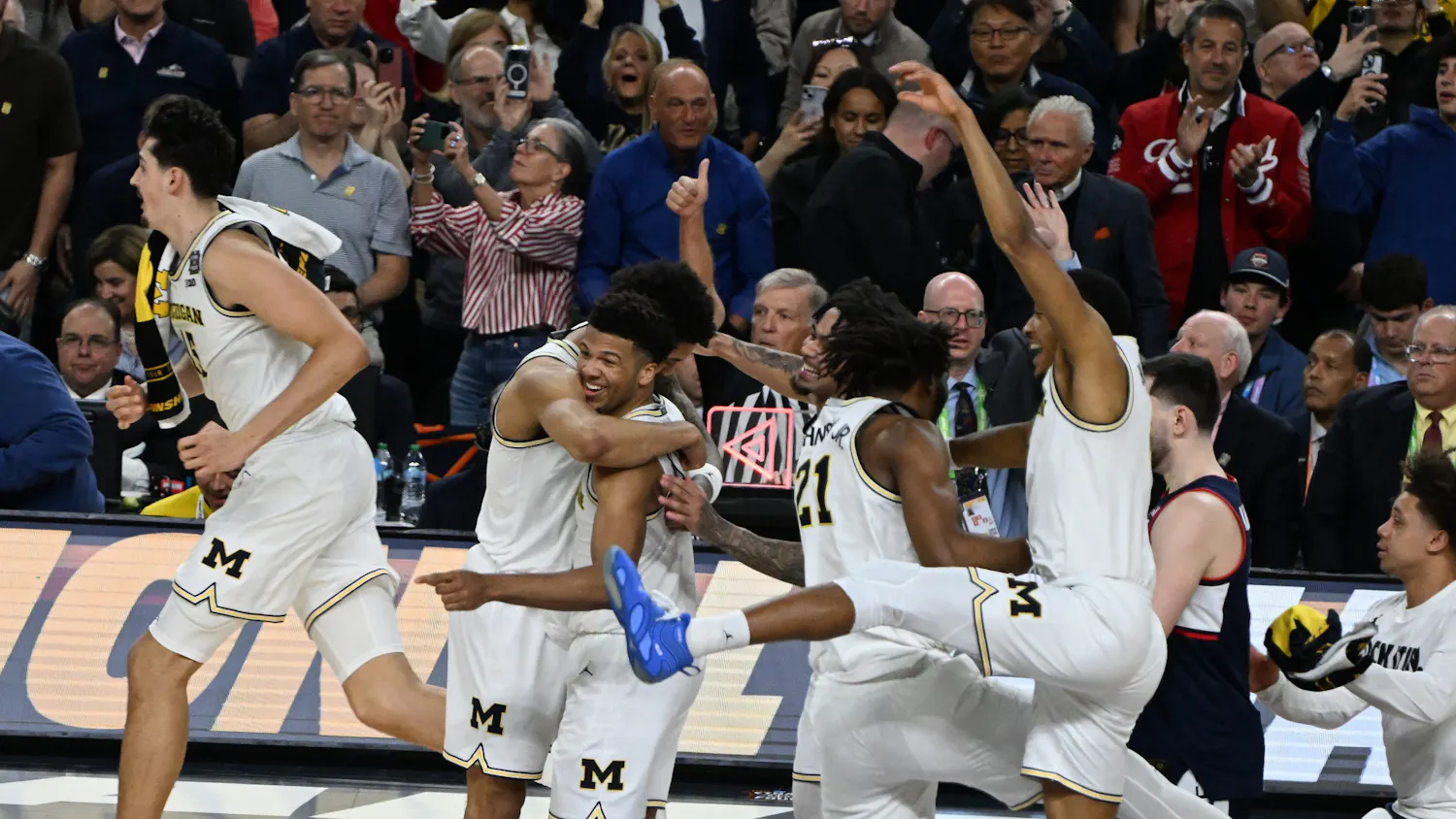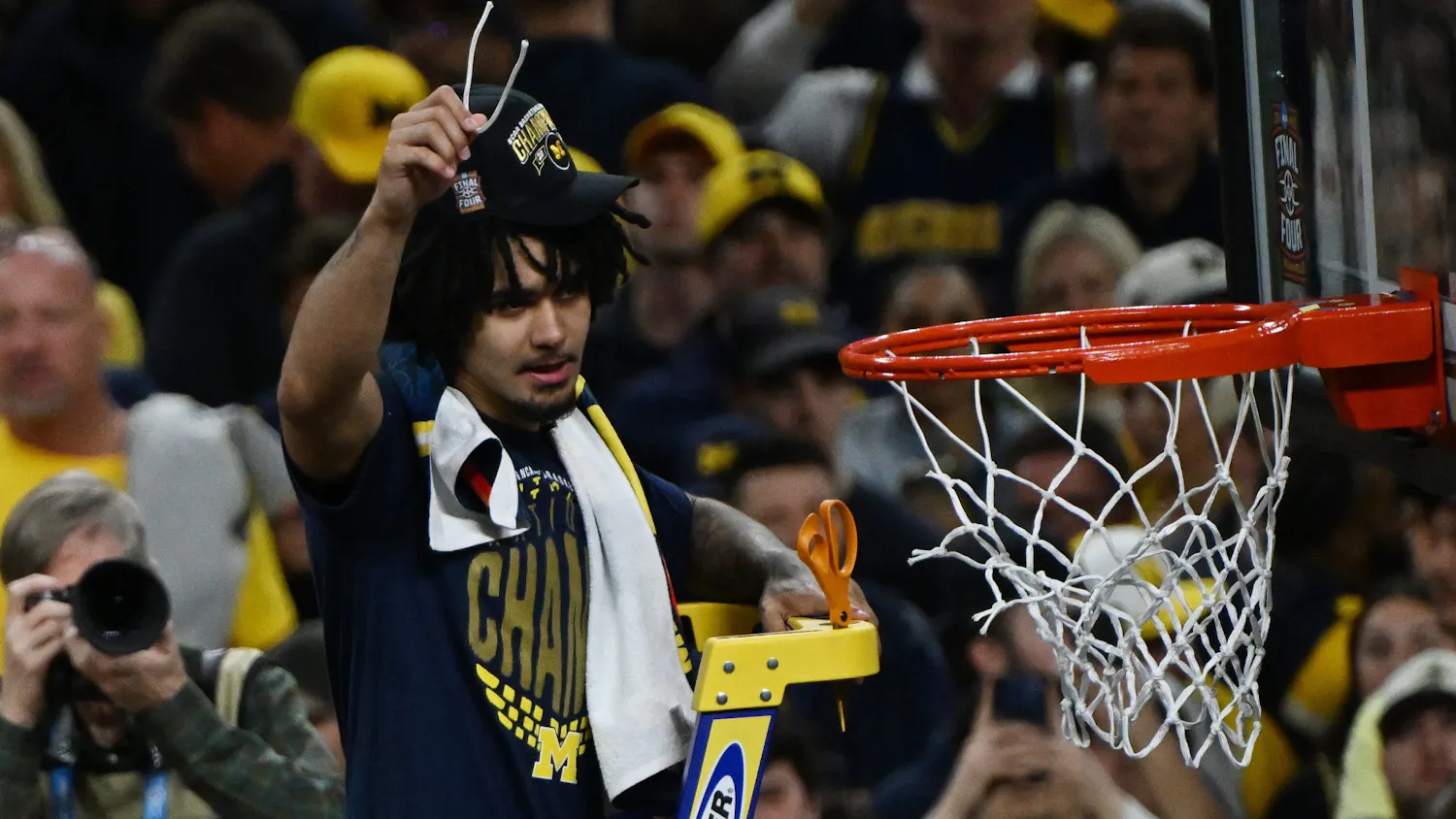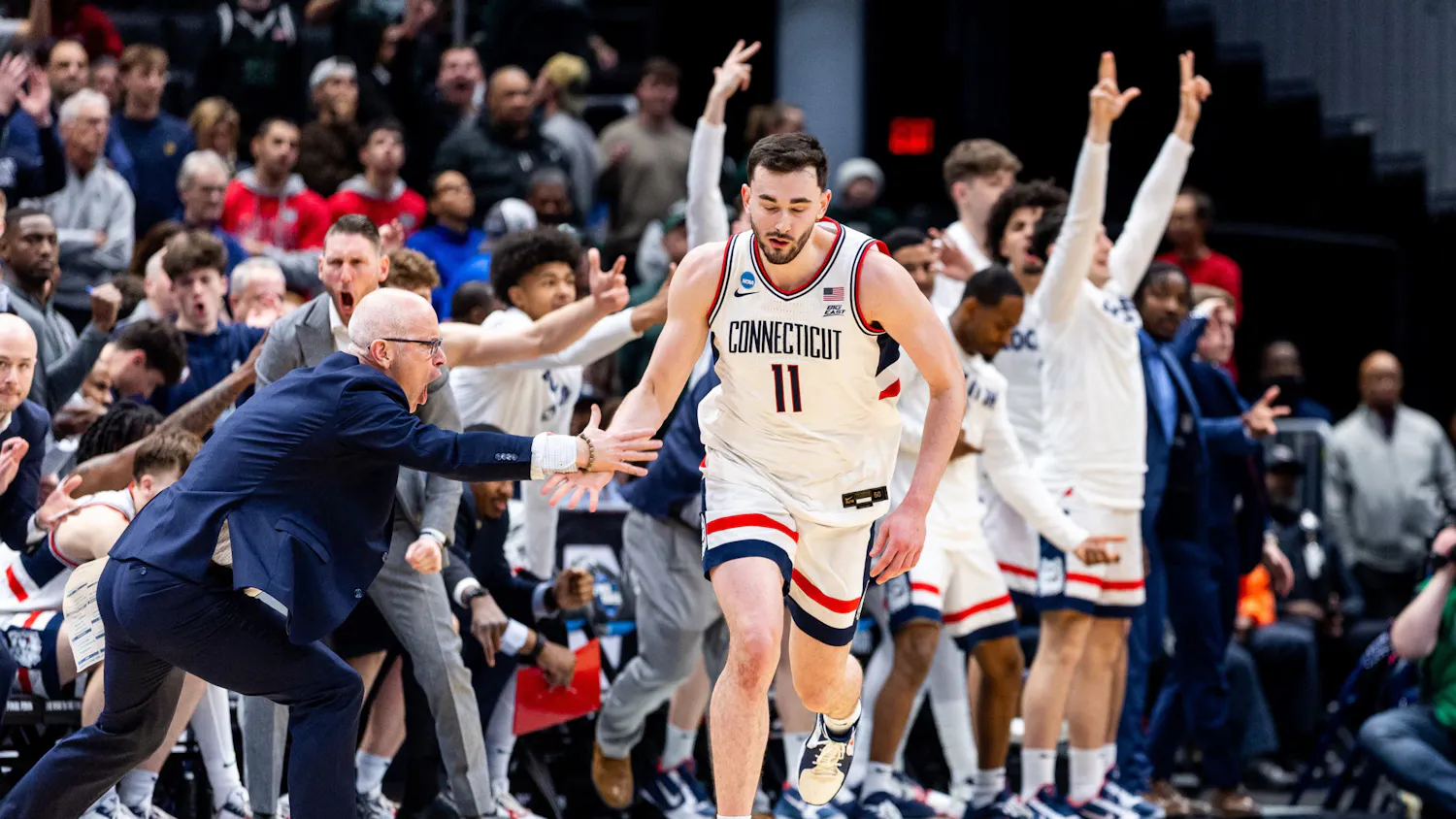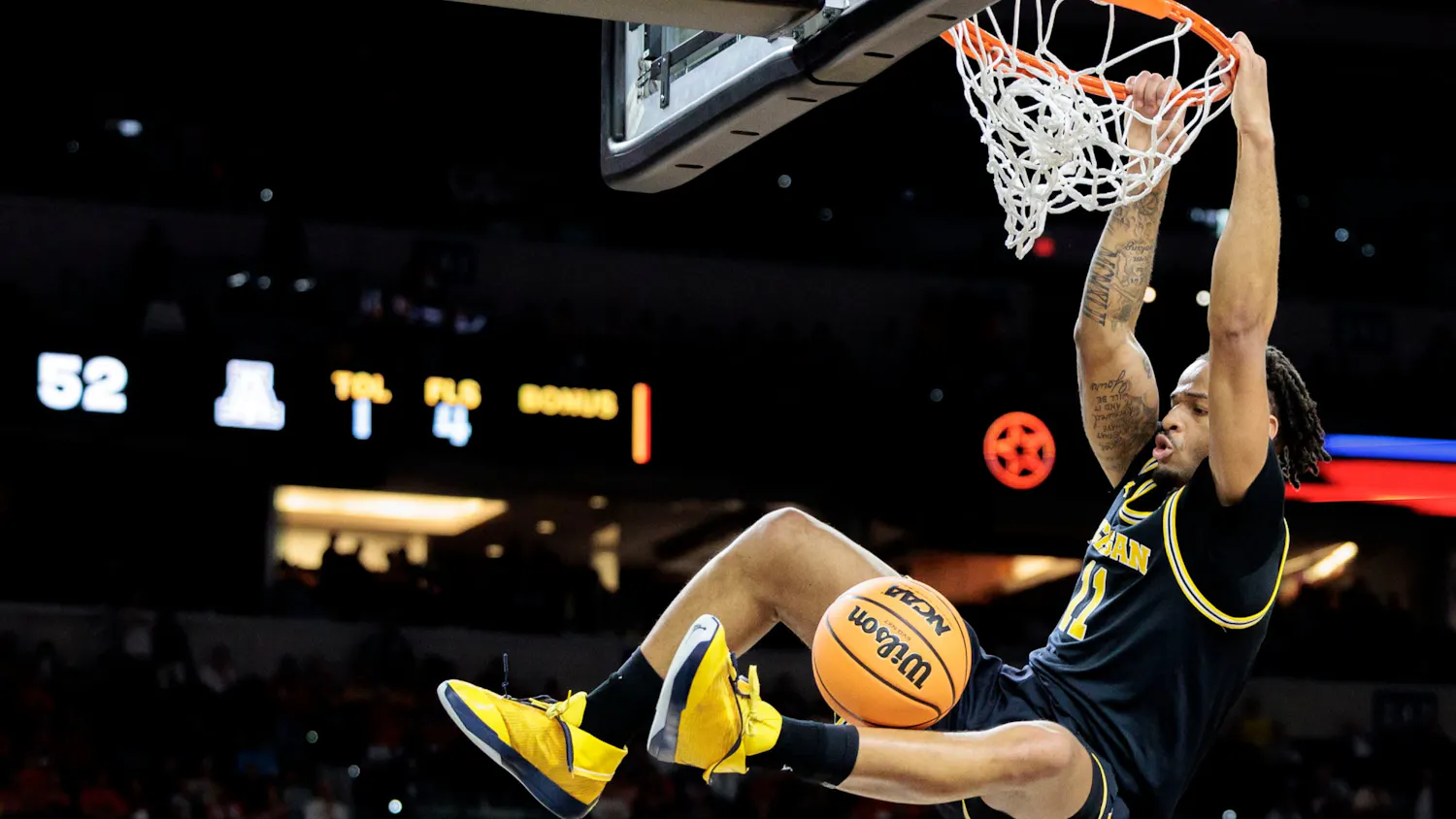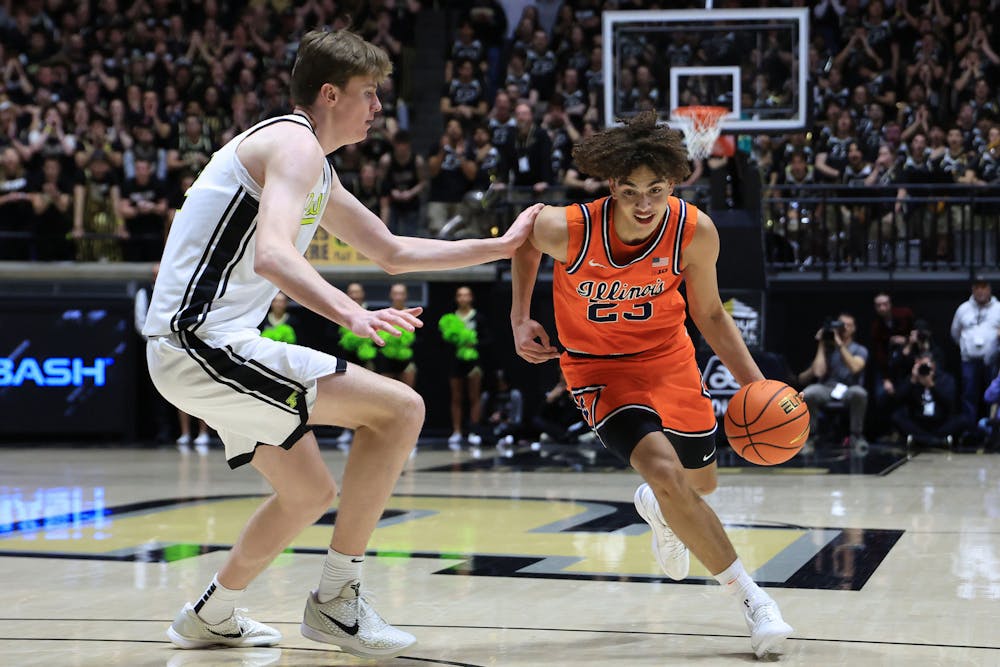
The high-level matchups continued for the Big Ten last week. Every night, the conference delivers fans an intense and close game.
Wisconsin went 2-0, picking up wins against Illinois and Michigan State. Iowa seemed to enter a rough stretch after losses to Maryland and Purdue. No. 15 Virginia downed Ohio State on Saturday in a late-season out-of-conference matchup. Northwestern scared Michigan on Wednesday, but the Wolverines righted the ship and came out on top. Then, Michigan blew out UCLA by 30 points on Saturday. Plus, Rutgers snapped a seven-game losing streak with a win over Maryland on Sunday.
Tuesday delivers two overtime thrillers
Where were you Tuesday night?
If your answer to the question wasn’t watching Big Ten basketball. I’m disappointed.
No. 7 Nebraska couldn’t close out a second-half comeback against No. 13 Purdue, while Wisconsin upset No. 8 Illinois in Champaign, Illinois. Two games. Two overtimes. And both games affected the top of the Big Ten standings.
Starting at Pinnacle Bank Arena in Lincoln, Nebraska, the Cornhuskers have recently hit a rough stretch. Coming into a Jan. 27 showdown against then-No. 3 Michigan, Nebraska was undefeated, 20-0. But since that 75-72 loss to the Wolverines, the Cornhuskers dropped three out of four games, with their only win coming against Rutgers, including an 80-77 defeat in overtime to the Boilermakers on Tuesday.
Nebraska is the best 3-point shooting team in the Big Ten. The Cornhuskers rank first in 3-point percentage (38.2%) in conference games, and they shoot the third-most 3-pointers per game, with their 3-point attempt rate ranking second in the Big Ten.
But Tuesday night was a different story for Nebraska, especially in the first half. The Cornhuskers attempted 16 3-pointers, however, only four were made. Fred Hoiberg’s group made just eight field goals in the opening 20 minutes, leading to a 16-point halftime deficit.
Nebraska awakened in the second half, making seven out of 14 attempts from behind the arc to outscore the Boilermakers 44-28 during the final 20 minutes. Purdue led by as many as 22 points in the second half, but an 11-1 scoring run to end the frame tied the game at 68-68.
The increased effort in the second half was led by the Cornhuskers limiting Purdue’s guard duo of Braden Smith and Fletcher Loyer. In the first half, Loyer led the Boilermakers with 11 points, while Smith chipped in 10 points and five assists. But the second half was a different story. Loyer went 1 for 6 from the field, while Smith wasn’t much better after a 1-for-7 performance.
The loss of Rienk Mast in overtime after he picked up his fifth foul sunk Nebraska on the boards. Purdue grabbed three of their 21 offensive rebounds to ice the game away in the final minute of overtime. The Cornhuskers recorded six for the entire game.
It also didn’t help that Jamarques Lawrence slipped with four seconds left in the extra period, and Nebraska was down by one.
The overtime games continued later into Tuesday night, as Wisconsin defeated Illinois 92-90 after rallying from a 12-point second-half deficit. It was the largest second-half comeback in a road game since 13 points against Minnesota on Jan. 16, 2022.
To open overtime, the Badgers rattled off eight straight points to extend their lead up to 89-81 with 2:36 remaining in the period. However, the Fighting Illini responded with a 6-0 scoring run.
But Wisconsin’s Nolan Winter made one of the best plays of the game. John Blackwell missed a jumper, and Winter hawked down the offensive rebound and called a timeout. The extra possession was rewarded after Braeden Carrington made two free throws to give the Badgers a 91-87 lead.
Twenty-five-point and 24-point performances by Nick Boyd and John Blackwell, respectively, helped Wisconsin to the upset victory. It was Boyd’s 15th game scoring 20 or more points this season, including 19 of Boyd’s them coming in the second half and overtime.
Along with Blackwell — who knocked down five 3-pointers — and Boyd, Austin Rapp played a major role off the bench. In his 31 minutes on the floor, Rapp finished with 18 points, knocking down four 3-pointers along the way. The trio combined to score all of Wisconsin’s final 22 points.
Illinois dropped its second straight game on Tuesday, but responded later in the week with a 71-51 victory over Indiana on Sunday. Even with 34 points from Keaton Wagler — 12-for-23 from the field — and every starter producing double-digit scoring, it wasn’t enough to take down the Badgers.
It dropped the Fighting Illini to three losses on their Big Ten record, but the win over the Hoosiers brought Illinois to second place in the conference. Its 12-3 Big Ten record falls one spot behind the Big Ten-leading 14-1 Michigan Wolverines.
The Fighting Illini still have to place No. 1 Michigan on Feb. 27, but three out of their five games to end the regular season are against teams in the bottom half of the conference standings.
Wisconsin’s win propelled the Badgers into conversations for one of the best résumés heading into Selection Sunday. Wisconsin now has wins on the road against Michigan and Illinois, plus a win against Michigan State on Friday. The Badgers are projected as an eight seed in the NCAA Tournament with matchups against Ohio State, Iowa and No. 7 Purdue that can help their seeding.
So, how good is Iowa this season?
The Hawkeyes entered this past week on a six-game winning streak, looking to continue their winning ways against Maryland on Wednesday. Iowa was supposed to win the matchup by more than 10 points.
What ensued was the Hawkeyes’ worst loss this season.
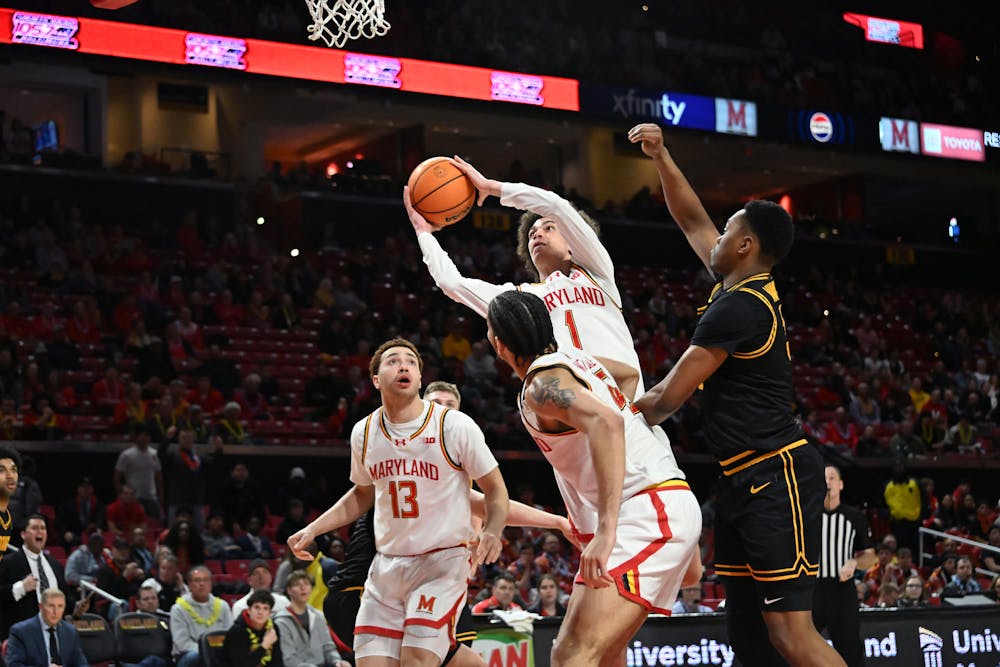
Iowa couldn’t shut down Maryland redshirt freshman guard Andre Mills all night. Mills finished the contest with a career-high 24 points in 40 minutes at the XFINITY Center in College Park, Maryland. David Coit produced 19 points off the bench, Elijah Saunders chipped in 12 and Solomon Washington had 10 and 8 rebounds.
The Terrapins looked to gain momentum for the first time in Big Ten play after also defeating Minnesota on Feb. 8. That momentum was short-lived, though, as Maryland then lost to Rutgers 68-57 on Sunday.
The Hawkeyes looked to be spooked most of the game around the rim. Maryland’s Collin Metcalf — who stands at 6-foot-9 — had three blocks in 12 minutes on the court in the first half. Iowa struggled to score throughout the half, as the Hawkeyes were 43% from the field and 33% from deep.
And Iowa’s struggles continued against No. 13 Purdue on Saturday. The Hawkeyes were downed 78-57 and were never in the game with the Boilermakers, including trailing by as much as 27 points in the second half.
Bennett Stirtz racked up 19 points, but no other Iowa player was in double digits on Sunday. Tavion Banks finished with nine points in 24 minutes, while Cam Manyawu had eight in the same amount of time.
Iowa’s shooting setbacks also continued on Sunday. The Hawkeyes were 20 for 53 from the field (38%) and 6 for 22 from deep (27%). It provided whiplash against a Purdue team that knocked down 12 3-pointers and 47% of its shots from the field.
The Hawkeyes have gone through rough stretches this season, including the last two games. In January, Iowa dropped three consecutive games. Starting with a three-point loss to Minnesota before losing to Illinois and Purdue. But the Hawkeyes then rattled off six consecutive wins.
It’s going to take a lot more if Iowa wants to try to do the same with six games remaining in its regular season. The Hawkeyes’ final stretch starts with No. 9 Nebraska on Tuesday before No. 24 Wisconsin on Sunday. It also ends with No. 1 Michigan and Nebraska. Sandwiched between those games is Ohio State and Penn State in State College, Pennsylvania.
Iowa is projected as an eight seed in the NCAA Tournament, but the lack of high-major experience for most players on this team is troubling. First-year head coach Ben McCollum brought most of this year’s Iowa team from last year’s Drake team.
It has turned the Hawkeyes into a top-half Big Ten team, however, it shouldn’t be a team projected to make much noise in March. After back-to-back losses, that chance feels a lot smaller.
Breaking down the Big Ten Freshman of the Year race
Keaton Wagler: It’s Wagler’s award to win or lose. After coming out of high school ranked as the No. 143 overall recruit in the nation, many didn’t expect Wagler’s ascent to happen this fast. The 6-foot-6 guard averages a Big Ten freshman best 18.5 points per game, knocking down 46.4% of his shots from the field and 43.2% from deep. Wagler has led the Fighting Illini in scoring in 10 games this season. That’s not something that most freshmen can do, especially in the Big Ten. Wagler has consistently been scoring for Illinois this season, with a 46-point masterpiece against Purdue in January being his standout performance. Like most freshmen, Wagler’s had off nights, but they’ve come against quality opponents. Three points against UConn in November and a 2-for-16 performance from the field against Michigan State in February come to mind. Yet, Wagler’s been the No. 1 scoring option for a top 10 team in the nation as a freshman.
Hannes Steinbach: Steinbach has been one of the most underrated players in the Big Ten this season. It’s partially due to the fact that he plays for a 13-13 Washington team that only has five conference wins, but most of those victories have come courtesy of outstanding performances from Steinbach. The 6-foot-11 forward has anchored the post this season for the guard-heavy Huskies. Steinbach leads the team in points per game with 18 and rebounds per contest with 11.3. The German native hasn’t made many plays that would end up on a highlight reel — like Wagler has — but Steinbach has kept Washington in games against top-tier Big Ten teams, even though they ended in losses.
Braden Frager: Speaking of underrated freshmen, Frager fits the description perfectly. After redshirting last season, Frager learned a lot by sitting and watching his teammates. That’s paid off this season. Even though Frager has only started one game for Nebraska this season, he’s been a crucial piece on a team that started the season 20-0 and is now ranked No. 9 in the country. In his 23.2 minutes per game, Frager has averaged 11.8 points and 3.7 rebounds. He’s knocked down 50% of his field goal attempts and 36.4% of his attempts from range. Frager has missed time this season after sustaining an ankle sprain against Washington on Jan. 21, but since returning, Frager has played 31, 22, 33 and 23 minutes. The 6-foot-7 forward has been hit or miss at times this season, but Frager’s role changes every night due to the amount of production that the starting lineup produces.
David Mirkovic: Another Illinois freshman who has been making noise this season has been Mirkovic. The 6-foot-9 forward has averaged 13 points, eight rebounds and 2.5 assists per contest this season. Mirkovic hasn’t been one of the most attention-grabbing players in the Big Ten season, but he’s been one of the most consistent. Mirkovic has produced double-digit points in nine straight games for Illinois, a stretch that was capped off with a 25-point performance against Indiana on Sunday. In 37 minutes, Mirkovic knocked down three 3-pointers, hauled in seven rebounds and produced three assists to help the Fighting Illini win by 20 points. He’s been overshadowed by Wagler this season, but Mirkovic has been efficient when shooting, making 47.9% of his shots from the field and 39% from deep.
Honorable Mentions: Kayden Mingo (Penn State), Trey McKenney (Michigan), Darius Adams (Maryland) and Amare Bynum (Ohio State)
One Game to Watch Every Day This Week
Tuesday Feb. 17
No. 1 Michigan @ No. 7 Purdue, 6:30 p.m., Peacock
Wednesday Feb. 18
No. 10 Illinois @ USC, 10 p.m., BTN
Friday Feb. 20
Indiana @ No. 7 Purdue, 8 p.m., FOX
Saturday Feb. 21
No. 1 Michigan @ No. 3 Duke, 6:30 p.m., ESPN (Played in Washington, D.C.)
Sunday Feb. 22
Iowa @ No. 24 Wisconsin, 4 p.m., FS1