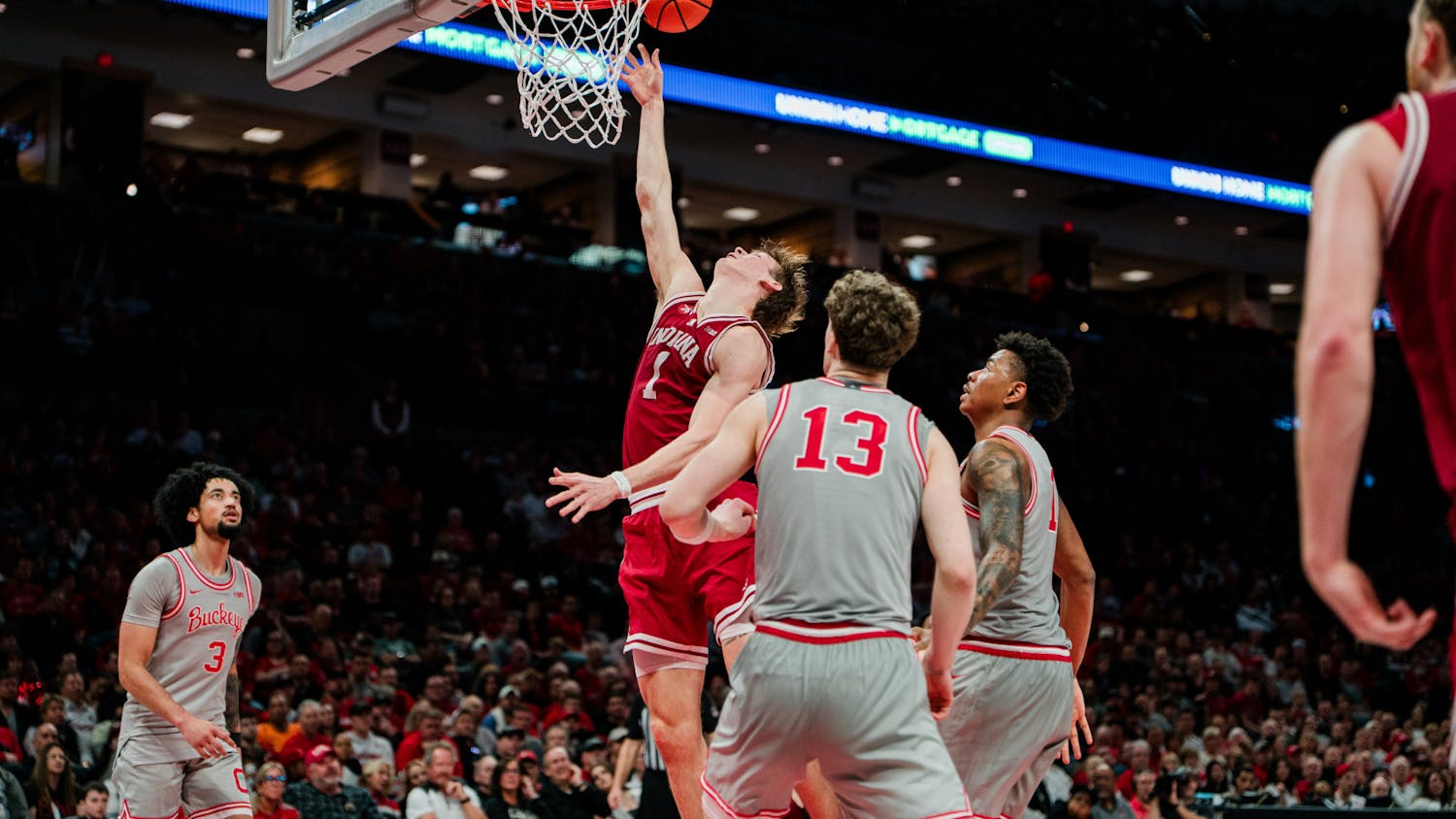
The noise inside Simon Skjodt Assembly Hall didn’t build slowly Tuesday night. It felt like a vintage atmosphere that presses down an opponent from the opening tip and only tightens when the game starts to lean one way or another. Indiana needed all of it.
In a hard-fought second half, No. 12 Purdue stormed back from a double-digit deficit but the Hoosier faithful never exhaled. It surged louder, again and again, willing the next defensive stop into existence. Indiana rode it, and in the process delivered a rivalry win that felt like a marker. Indiana 72, Purdue 67 glimmered on the scoreboard for Darian DeVries’ first big statement as the head man of the program.
“I think I’m going to start off, I’m going to say the biggest key was that crowd out there,” DeVries said. “That was awesome… When they’re making their run and our crowd kept willing us… that’s a huge deal in college basketball.”
For a program in its first year under a new coach, Tuesday wasn’t just a ranked win. It was an example of what Indiana wants to be — connected, physical, and fueled by a home court that can still tilt a game when it turns into a full-body experience.
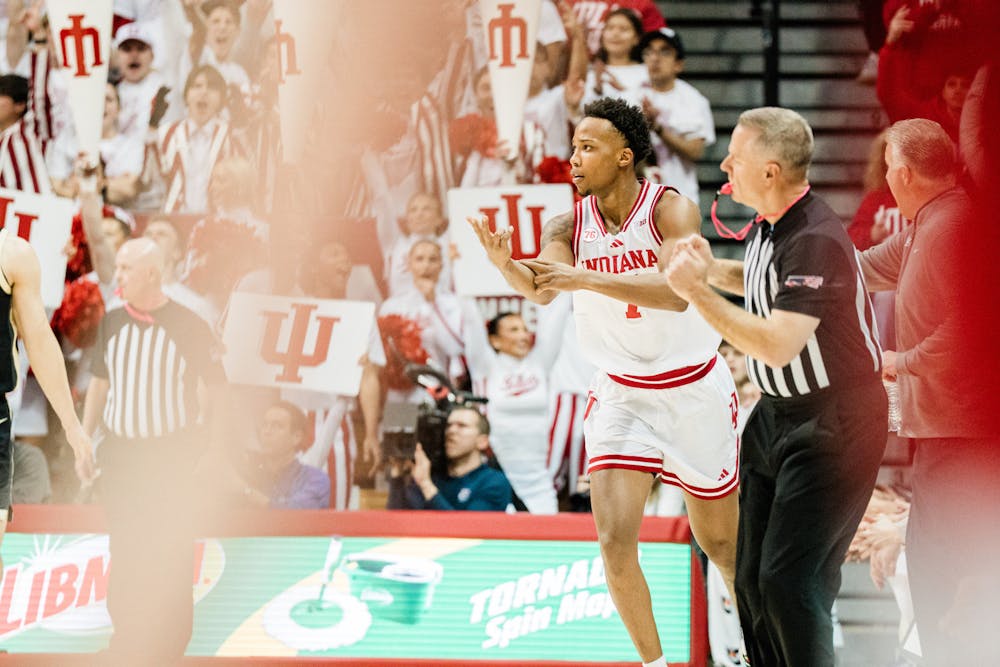
Indiana’s opening burst came from Nick Dorn, the Elon transfer earning just his second start with Tayton Conerway sidelined with an ankle injury. Dorn’s early confidence set a tone that felt contagious. Coming off a 22-point performance at Rutgers, his first five points arrived quickly, and when he knocked down a 3 near the midway point of the half, Assembly Hall responded with a sustained hum that followed Indiana from possession to possession.
Purdue briefly steadied itself when foul trouble forced Indiana to adjust. With Sam Alexis sidelined by a second foul, the Boilermakers strung together a handful of scores, momentarily quieting the building and hinting at a shift.
Instead, the game tilted harder in Indiana’s direction.
What followed wasn’t defined by one shot or one stop, but by a stretch of collective urgency — the kind that feeds directly into a crowd. A 3 from Lamar Wilkerson, who led IU with 19 points, ignited the bench. Tucker DeVries followed that up moments later, and suddenly Indiana was playing downhill, turning defensive rebounds into second chances and effort plays into momentum.
The sequence that best captured it came midway through the half: a defensive rebound, into an offensive rebound at the other end, then a kickout to Jasai Miles, whose 3 landed to a roar that felt louder than the scoreboard. Purdue took a timeout, but Indiana never lost its grip.
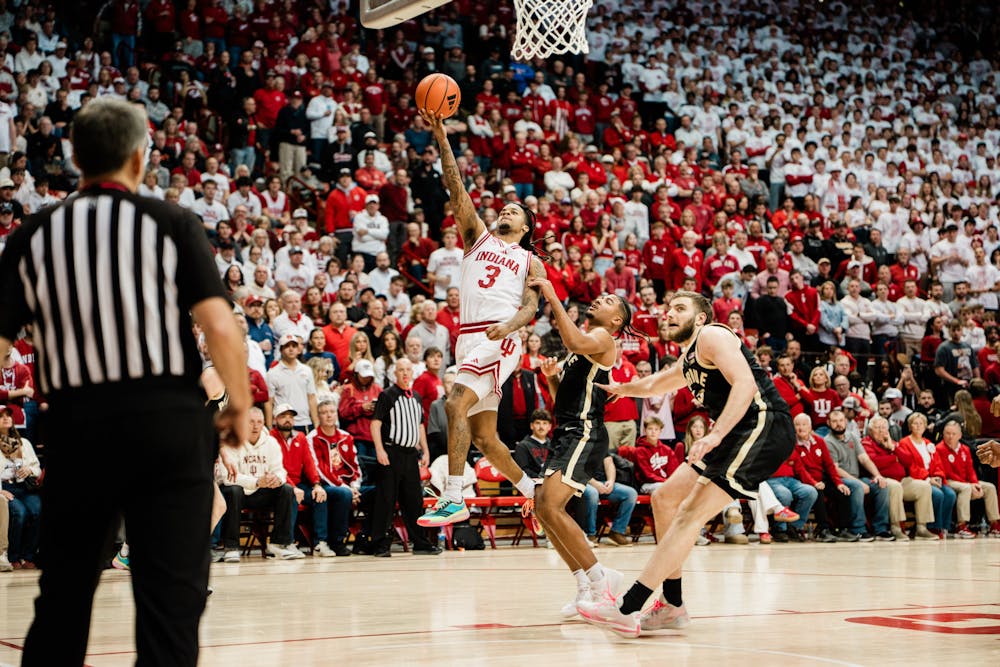
By halftime, Indiana had opened a double-digit lead and Assembly Hall had fully assumed its role. Every defensive possession carried weight. Every Purdue touch was met with pressure, noise and bodies moving in unison.
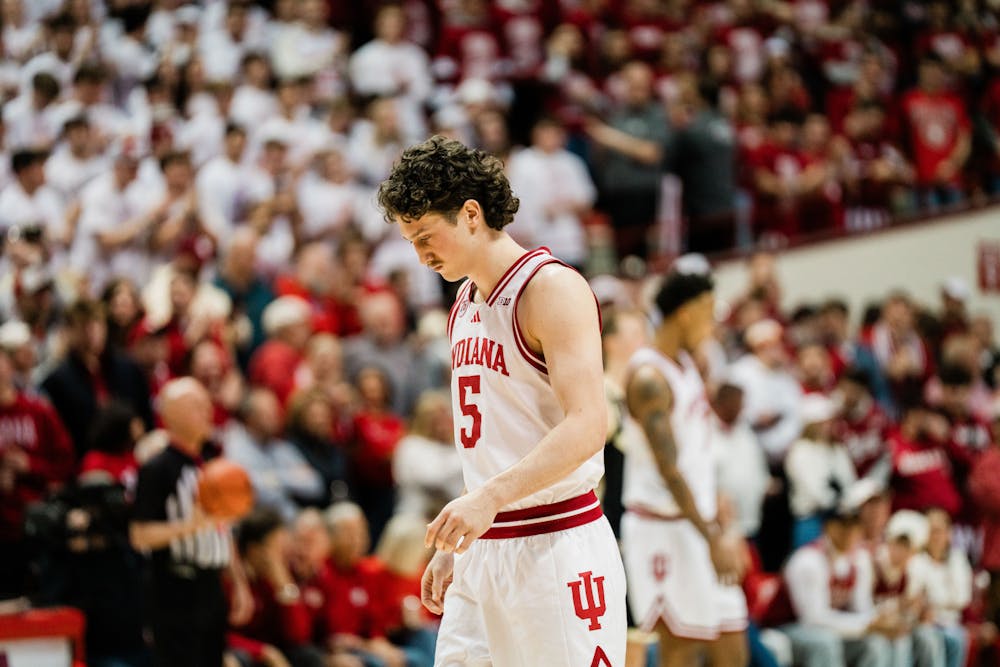
That pressure showed up most clearly in what Purdue couldn’t do. Braden Smith and Fletcher Loyer finished the first half without a single assist, a rare disruption for the engine of the Boilermaker offense. It wasn’t about one defender winning a matchup as much as five players closing space and trusting the help behind them.
“I thought Conor Enright — 40 minutes of chasing Smith around — that’s not an easy deal,” Darian DeVries said. “That’s if not the best guard in the country right there.”
Enright framed it simply.
“It was five guys guarding the ball every single time,” he said.
Indiana carried that energy into the second half, briefly pushing the margin wider as Dorn, who finished with 18 points, continued to punish defensive lapses with timely shot-making. Each basket felt less like an isolated moment and more like a response to Purdue’s pressure, and to the crowd’s demand, to the pace Indiana wanted to dictate.
Purdue, as it always does, refused to fold. The final minutes tightened, possessions grew heavier, and the margin shrank into the kind of uneasy space rivalry games often inhabit. Missed chances and turnovers turned the closing stretch into a test of composure rather than execution.
Inside Assembly Hall, the noise never dipped — it shifted. From celebration to anticipation, from roar to collective inhale.
Indiana bent, but it didn’t break.
The lead that once ballooned to 14 fell back down to two with just over 30 ticks remaining.
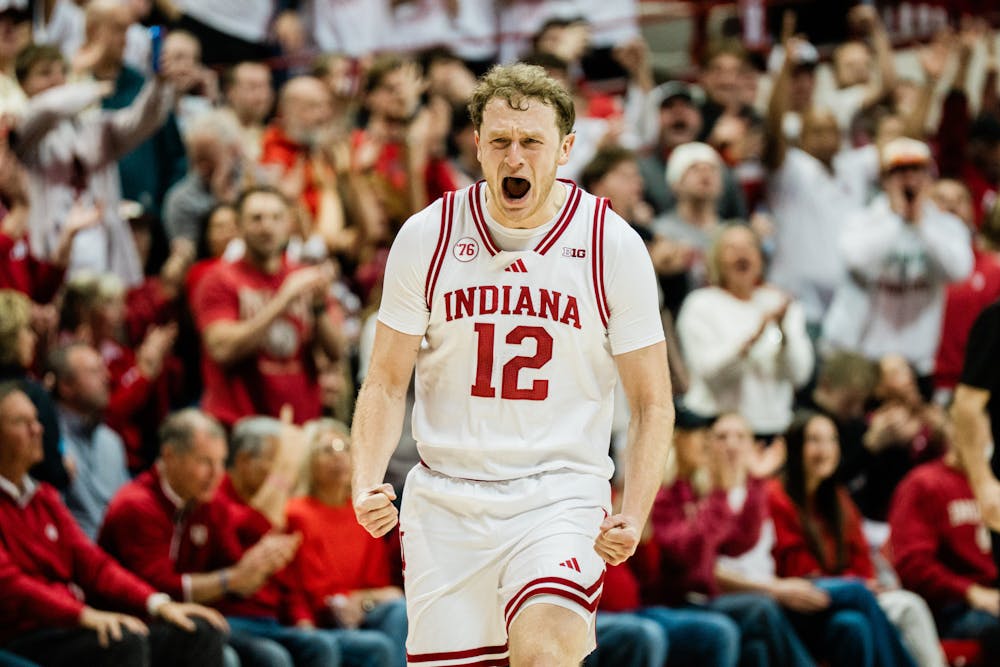
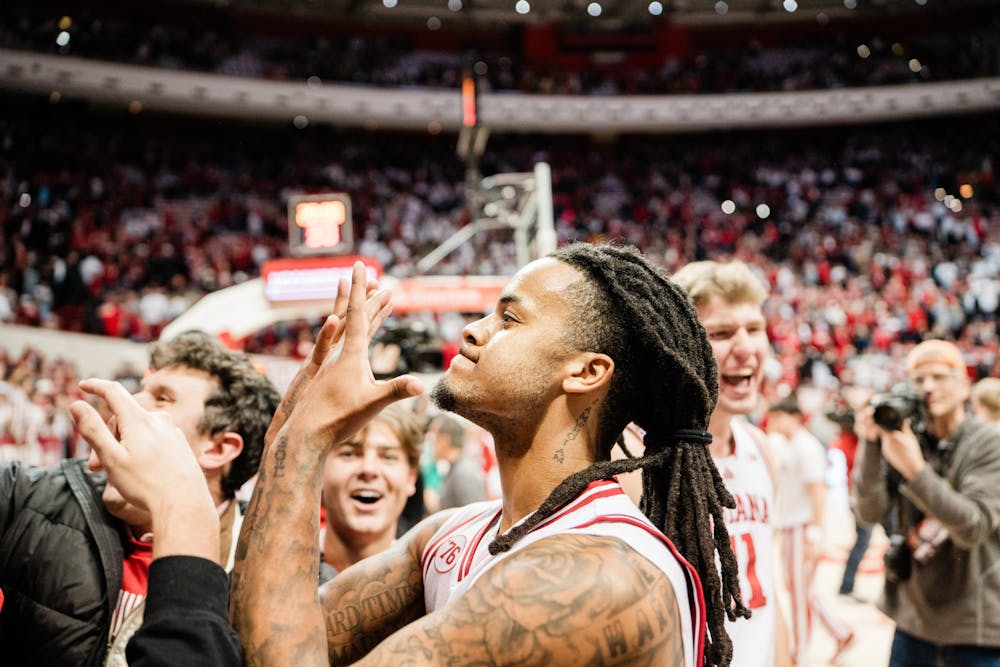
Enright, cramping and exhausted, hit two late free throws on top of a game-altering 3 at the top of the shot clock. Indiana’s defense held. The clock bled out. And Darian DeVries headed straight for the students after the horn, a gesture as much about building something as celebrating what had just happened.
“I want this to be like — this is us,” DeVries said. “This is our program. And it’s our community, it’s our students. I want them to feel their impact matters because it does.”
Enright, who said his brother attended Indiana, looked up into a full house and felt the meaning of it.
“It’s really cool to see all the fans, packed house,” he said. “I understand how much this rivalry means.”
Indiana’s history in this series has always been tied to what happens inside Assembly Hall, and Tuesday fit the pattern. It marked the fourth time in five years the Hoosiers beat a ranked Purdue team in Bloomington. Purdue has now lost three straight and will get the rematch on Feb. 20 at Mackey Arena.
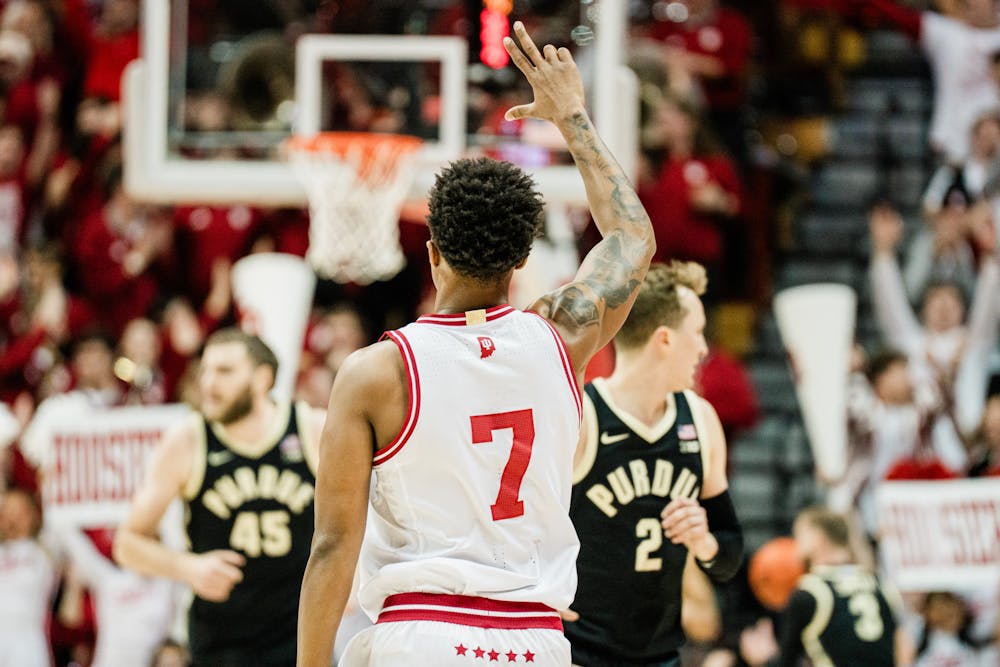
But the larger takeaway, at least for one night, wasn’t about February. It was about the first real evidence of what DeVries’ Indiana can look like when the pieces connect — the fight, the discipline, and the shots that land with the sound of 17,000 people behind them.
“There’s not a lot of crowds — there’s some good ones out there,” DeVries said, “but this is really, really special when it’s like that. And tonight was as good as it gets in college basketball.”
On a night Indiana needed every edge it could get, Assembly Hall gave it one for 40 minutes.