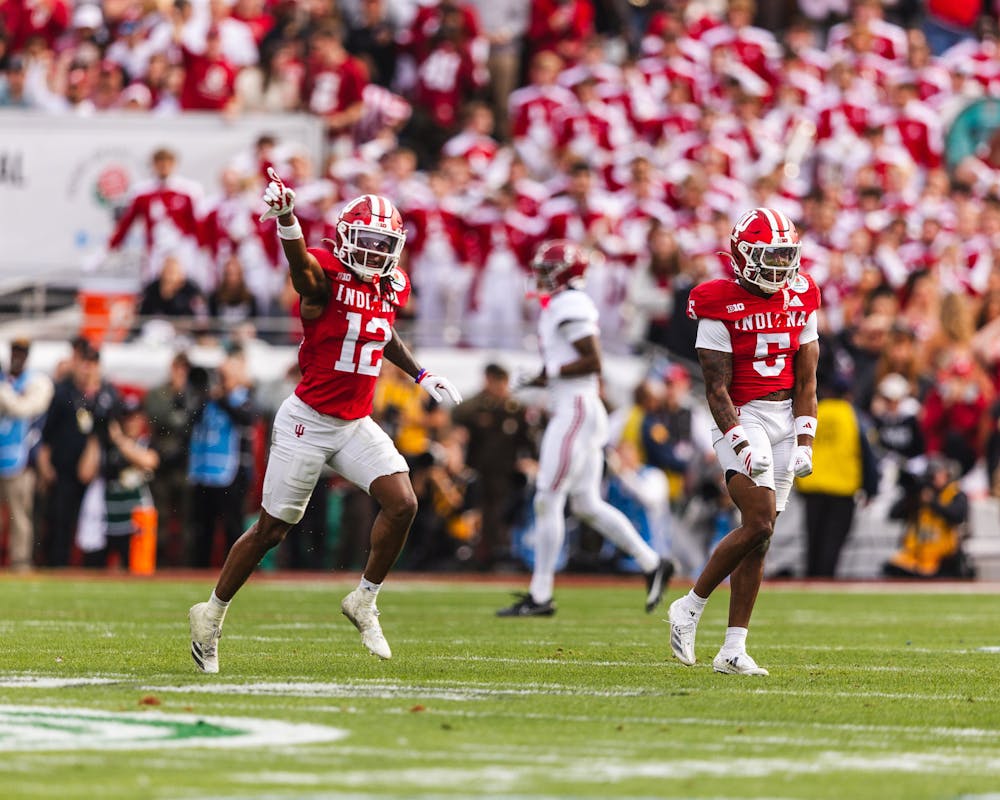
MIAMI – Miami wide receivers coach Kevin Beard said Saturday that he’s never seen a scheme like Indiana’s defensive backs run with their zone coverage.
"Never," Beard said at media day prior to Monday's College Football Playoff National Championship Game. "I’ve never seen it."
The scheme has given teams fits all season. Not once, but twice it’s put Oregon quarterback Dante Moore in football purgatory trying to dissect it. Moore, a semifinalist for the Maxwell Award for top player in the country, suffered two of his lowest passer ratings and his only two losses this season against the Hoosiers, including last week’s College Football Playoff Semifinal.
The Indiana defense is one of the best, if not the best defense in college football. Nationally, Indiana is second in points per game allowed (11.1); second in sacks (45); tied for seventh in interceptions (18); and top 25 in passing yards allowed per game (185.9).
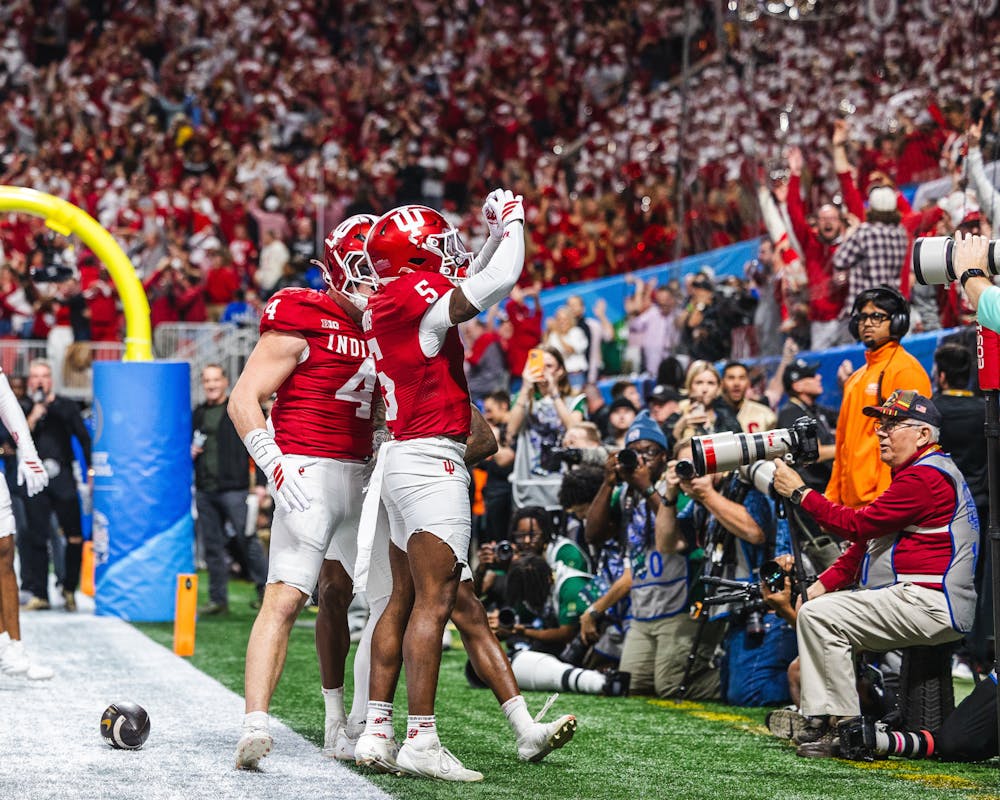
The Hoosiers hold quarterbacks to a completion percentage of 62, on passes averaging six yards per completion. They got beat occasionally early in the season, a few times against Kennesaw State, once against Illinois, once at Oregon, and then not until the Big Ten Championship was the next big gain against this defense with a pass play of major air yards.
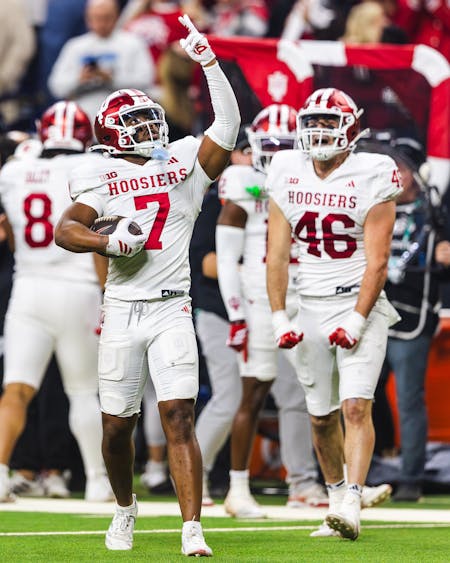
“They're always in the right spot, they mix up stuff and disguise it very well, and they track the football,” Miami offensive coordinator Shannon Dawson said on Saturday.
The corners alone, Jamari Sharpe and D’Angelo Ponds, combine for 64 collegiate starts. Add in safeties Amare Ferrell, Louis Moore and rover Devan Boykin, 151 collegiate starts among the defensive backs. One hundred and fifty-one.
They’ll add another in the College Football Playoff National Championship on Monday night at 7:30 p.m. Eastern vs No. 10 Miami.
The football IQ of this group is off the chart, they move together “on a string” according to both Beard and Dawson.
They run all sorts of coverages, man-to-man, base zone, match zone, and their most dangerous is their disguised zones.
Except the DBs can disguise every single play. The philosophy is to make the quarterback make his decision post snap, not pre, according to Indiana defensive backs coach Ola Adams.
That’s what led to Ponds’ interception to start the Peach Bowl, Cover 3 match zone coverage disguised as a base Cover 4, Moore made his decision post snap — a.k.a. too damn late against this defense.
(From top down) Sharpe stays put, awaiting anyone to attack him vertically in his third, Boykin flies down to the hook zone (5-7 yards deep) to defend in breaking routes, Moore goes overtop to take a deep third, meanwhile Ponds’ deep third was challenged by one threat so he went into match coverage and basically played man. House call.
This isn’t new for Indiana’s defense to fool quarterbacks and lead to turnovers or pass breakups. They got college football’s most efficient quarterback in Ohio State’s Julian Sayin during the Big Ten Championship too out of a Cover 2 invert disguised as a base coverage.
(From top down) Sharpe stays home to guard the flat, taking away an out breaking route. Ferrell drops to his deep half, taking the vertical option away. Ponds bails with the vertical threat to take a deep half and Hardy takes away that flat area. Moore makes it look like he’s taking deep, but he doesn’t bail off the snap; he sits watching Sayin’s eyes; Sayin thinks he has the middle hole behind the linebackers in hook zones; Moore breaks on it and then it’s Indiana's ball.
“With zone coverage we look at the quarterback, so we can see where it’s going, so it’s easy to break on the big plays,” Moore said Saturday.
What’s so impressive is how trained these DBs are to play with their eyes in the backfield. On average, college defensive backs get burnt trying to play like that. Safeties not so much, but corners? That’s extremely impressive and professional level skill.
“We call it a birdhead,” Adams said. “We have to kind of have a feel for what's going on around you. And the more you can get indicators pre-snap, you kind of know potentially what you may get, from the offense, that helps you anticipate how to manipulate the quarterback as well.”
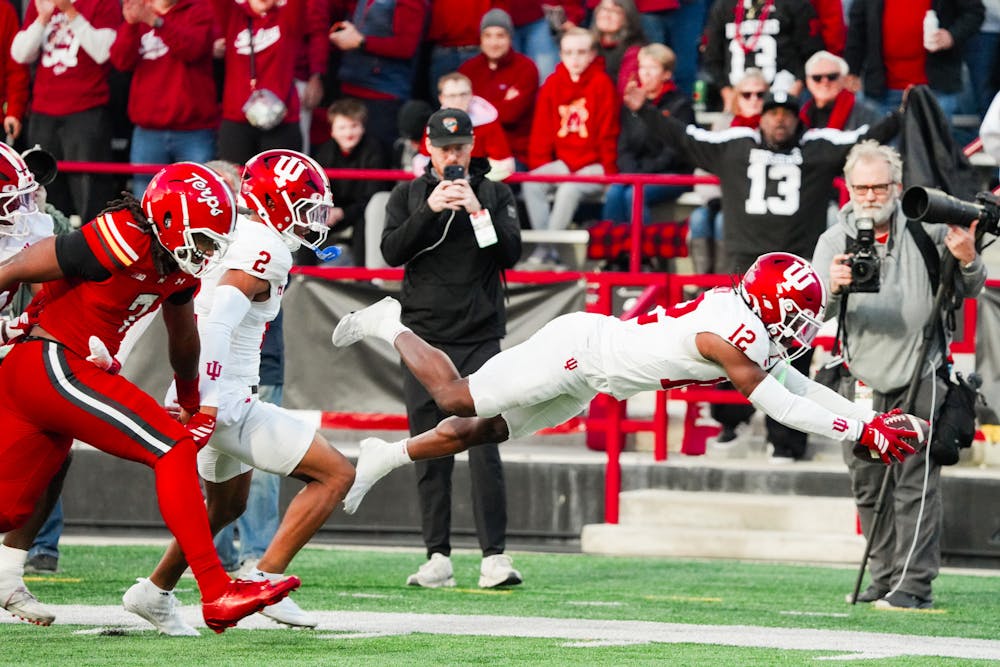
Manipulate the quarterback this defensive backfield does, on a regular basis. They’ve recorded an interception in all but three games this season. Those three games they’ve won by a margin of 133 points.
Indiana seemingly has recreated Thieves’ Avenue, they’ve even created more turnovers than that 2015 Carolina Panthers squad (10).
The man ability is nothing to scoff at either, hence why Indiana’s DBs force quarterbacks to make decisions post-snap. The amount of tip drill interceptions they cause is astounding. But it’s the zone coverage they utilize that is so elite.
Louis Moore credited the defensive line as a reason for the defensive backs to be able to do what they do. Pressuring the quarterbacks has led to some plenty of opportunities for Indiana as well. But it’s the defensive backs that end up with all these interceptions.
“They work on a string,” Miami wide receiver coach Beard said. “They know what each other's doing. And that's why they're in the position they're in right now.”