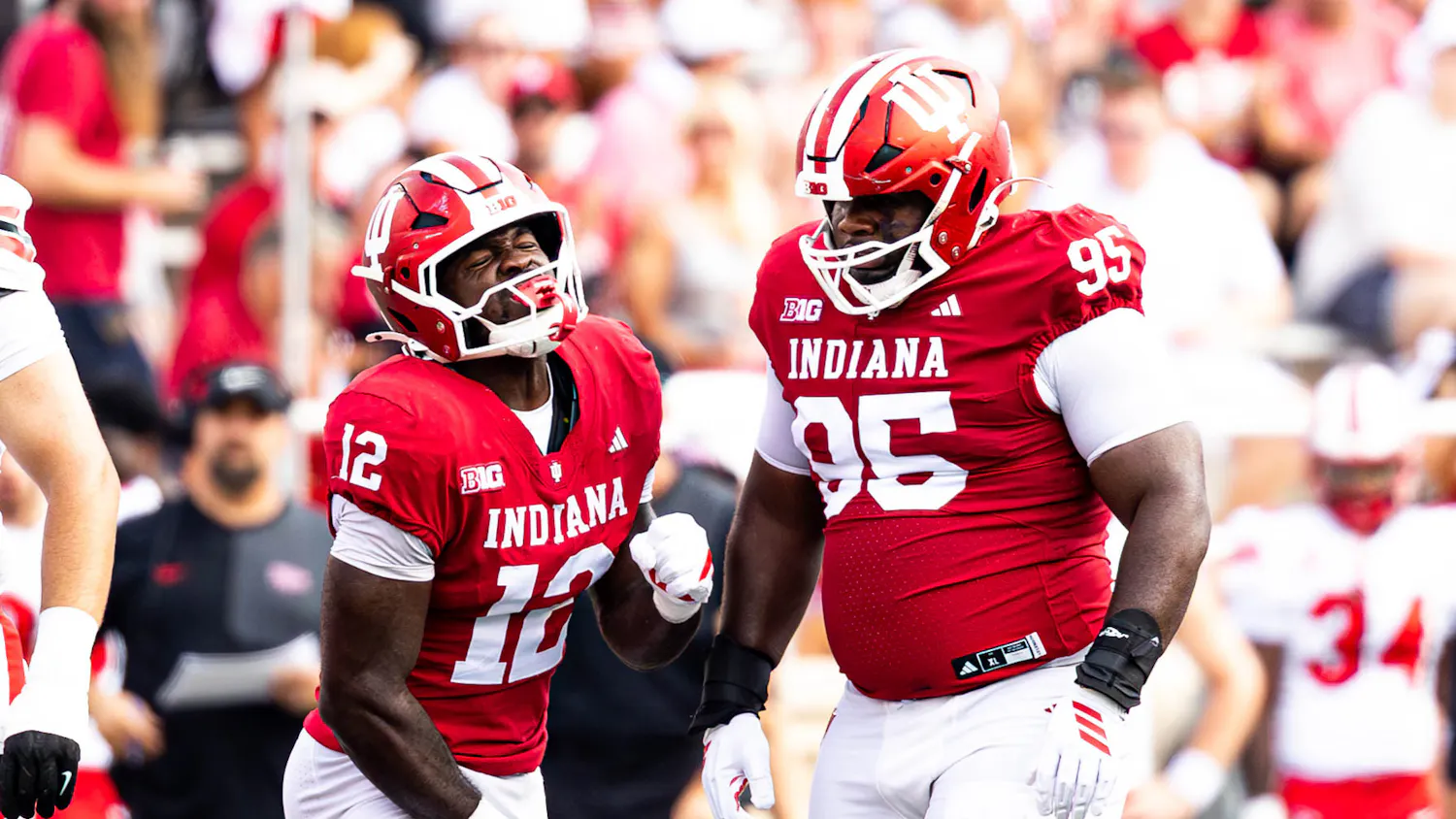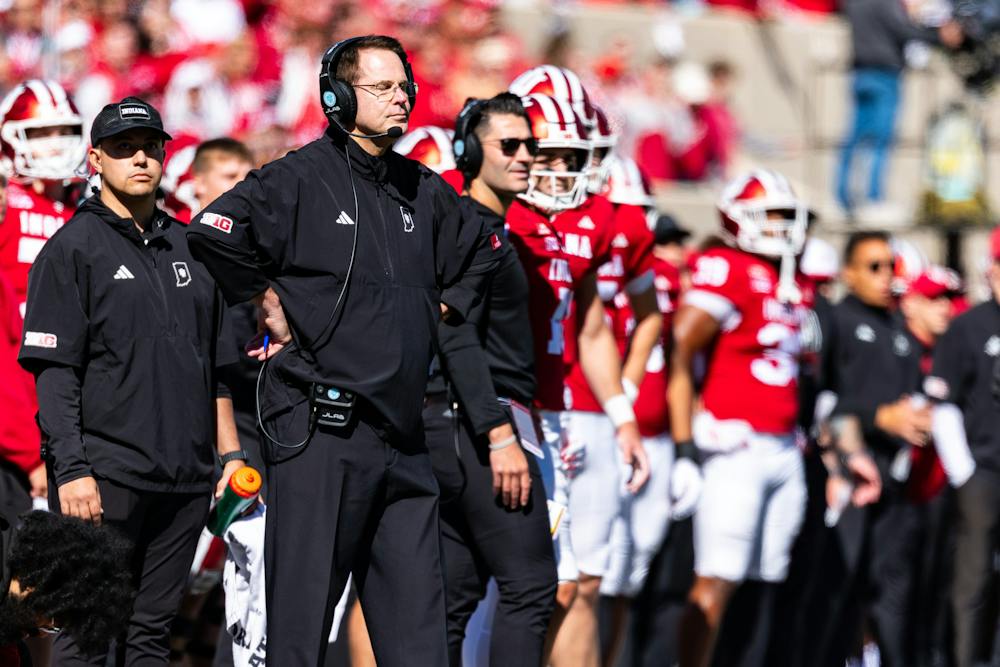
Indiana doesn’t lose. That was the expectation. Twenty-two straight wins, a national title, a coach who had never lost at home, and a sea of fans in red who have been accustomed to winning at Memorial Stadium. Then Josh Hoover's last pass floated toward Nick Marsh, Marsh's foot touched the sideline, and for the first time in two years, nobody in Memorial Stadium knew what to say. There were no fireworks and no roar, only the silence of 22 straight wins ending in front of a sold-out crowd.
Ohio State defeated Indiana 19-15 in an absolute grudge match. The first top-five game this stadium has ever hosted was supposed to prove the Hoosiers were what they said they were. Instead, the Buckeyes handed Indiana its first loss since the streak began in Week 1 of 2025, and the first at home of Curt Cignetti's tenure in Bloomington. Fans left stunned; a couple of years ago, it was unimaginable that the losingest program in college football could be disappointed to lose to Ohio State. But this is the new Indiana football, a program that expects winning.
A Program That Forgot How to Lose
You can't explain this game by looking at the box score, but it tells the story of two pretty similar teams. Indiana outgained Ohio State 369-313 and averaged 5.3 yards per play to 4.6. It sacked the Buckeyes four times, intercepted two passes, and won the points-off-turnovers battle, 7-3, and yet Indiana’s fifth-year signal-caller might’ve been the problem. None of Hoover's incompletions were drops. The Hoosiers lost because Hoover couldn’t get in rhythm, and it cost Indiana perfection.
Cignetti pointed to a third-and-4 near the 12-yard line late in the second quarter as a turning point. The Hoosiers put three receivers to the left hash, hoping to push their lead to double digits before the break, and couldn’t convert. Hoover never saw Brock Schott in the end zone and couldn’t link up with Turbo Richard.
“Both guys are wide open, and we didn't make it happen,” Cignetti said.
Nico Radicic's subsequent field goal hit the crossbar. Ohio State went 80 yards in 15 plays and scored with seven seconds left, turning a 7-3 Indiana lead into a 10-7 halftime deficit.
"I think most of it was, we had a lot of pass game opportunities and we didn't take advantage of enough of them," Cignetti said.
The Standard Has Been Set
Cignetti didn’t throw his quarterback under the bus as Hoover’s old head coach might have. He said Hoover had a couple of misfires. Hoover went 20 of 40 for 296 yards and one touchdown. Too many of the 20 incompletions sailed past open receivers. Charlie Becker caught nine passes for 165 yards on 18 targets, and the rest of the offense struggled to produce. Marsh was targeted six times, caught three passes for 57 yards, and scored the only receiving touchdown.
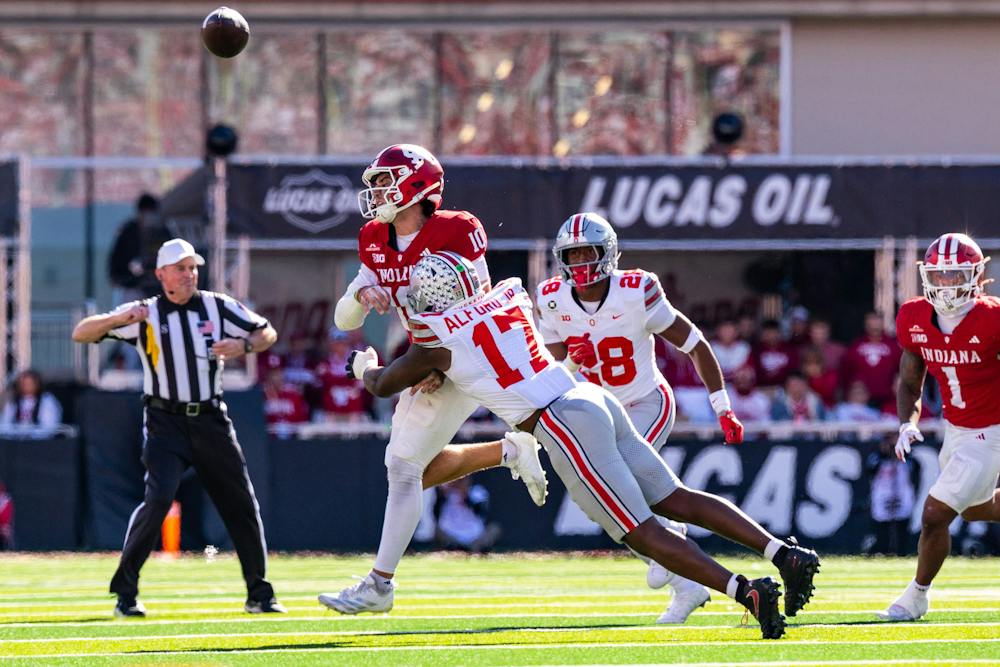
Hoover has received criticism from across the country for his inaccuracies and ball placement issues. Saturday, Hoover looked like a deer in headlights with open receivers across the middle of the field. Hoover overthrew his targets and didn't give his receivers a chance to make a play on the ball near the boundaries. For the Indiana fan whose priorities have changed since Cignetti was hired and football is now more important than basketball, Fernando Mendoza’s Heisman-winning season set the high bar for quarterback play in Bloomington.
“When you play quarterback, it’s all about getting the ball to the open guy on time, accurately, as quickly as possible,” Cignetti said. “So that’s the bottom line on a quarterback.”
The second half didn’t start well for Hoover and the Indiana offense. Indiana lost fumbles on back-to-back possessions to open the third quarter, including Hoover’s first turnover of the season. The Hoosiers had gone more than 1,400 offensive snaps without losing a fumble, a streak dating to the 2025 opener. Ohio State turned Davion Chandler’s fumble into three points to extend its lead off of Connor Hawkins’s 29-yard field goal. Later in the quarter, Ohio State sacked Hoover on fourth down in the red zone.
Arguably the most important statistic of the day was the fourth-down efficiency. Indiana finished 0-for-2 on fourth down. The Buckeyes went 2-for-2, and one of those conversions was Julian Sayin’s 38-yard touchdown pass to Jeremiah Smith, making it 19-7.
Everyone Expected the Finish
For one drive, Indiana looked like itself. Hoover, back from a minor arm injury he suffered during a play in the second half, led a 75-yard march and hit Marsh for a 19-yard touchdown. The Hoosiers skipped the kick and went for two, and Hoover found Richard to make it 19-15 with 10:30 left. Memorial Stadium’s energy was revitalized. The home fans had finally gotten a game where Indiana’s backs were against the wall on home soil. After road wins in close games under Cignetti against Nebraska, Iowa, Penn State and Oregon, the fanbase expected a win on Saturday.
The defense never stopped giving the offense chances. Indiana safety Amare Ferrell played the game of his life for the Hoosiers, notching two interceptions. Indiana’s defense had to stop the Buckeye offense to give the Hoosiers a chance at a final drive. Bryant Haines’ defense handed the offense possession on the Indiana 30-yard-line with 3:06 left on the clock.
Indiana was gifted with a golden opportunity, a chance to drive down the field in front of a packed house and win a top-five matchup. Fans felt a win was close and had all the confidence in the world in the Indiana coaching staff to march down the field and complete a program-validating conference win. This wasn’t just another game for Indiana. This was a prime chance to assert themselves as perennial contenders in the Big Ten Conference.
Nobody Knew What to Say
In a matchup between the past two national champions, someone had to lose.
With 1:02 to play and the ball at midfield territory, Hoover faced fourth-and-4. Marsh got wide open, and the throw was good. Marsh’s left foot came down on the line. He knew before anyone else, put both hands on his helmet, and the building was still, silent, and utterly shocked.
“That was our blitz check,” Cignetti said. “We had it, we just didn’t make it happen. This one is a tough one to swallow.”
The loss doesn’t hurt as bad after results around the country have fallen in favor of the Hoosiers. Five of the top eight teams in the AP Top 25 lost on Saturday.
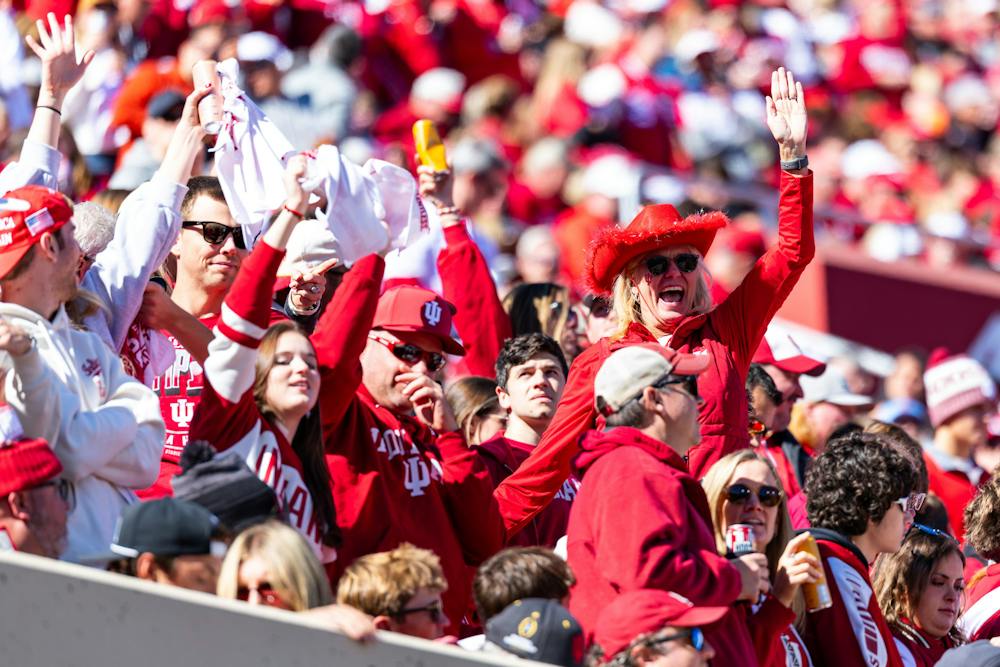
USC is the only ranked opponent left on the schedule, and the Hoosiers still control their path to the playoff. Next is Michigan in Ann Arbor, where they’ll try to win back-to-back games over the Wolverines for the first time since 1958-59.
“Sun comes up tomorrow, and get ready for Michigan,” Cignetti said. “It’s still all ahead of us. We can accomplish anything we want, all our goals, except going undefeated.”
For 22 games, Indiana never had to find the words after a loss. On Saturday afternoon, it had to find them for the first time since 2024. Since that night in South Bend, Indiana, the expectations and demand for success have only grown. Nobody expected Indiana to beat Notre Dame in 2024. Two years and a national title later, fans decked head to toe in crimson sat in silence at Memorial Stadium because now they expect to win every week. Expectations shift to Michigan with the Hoosiers and their fans finding their voice again in Ann Arbor.