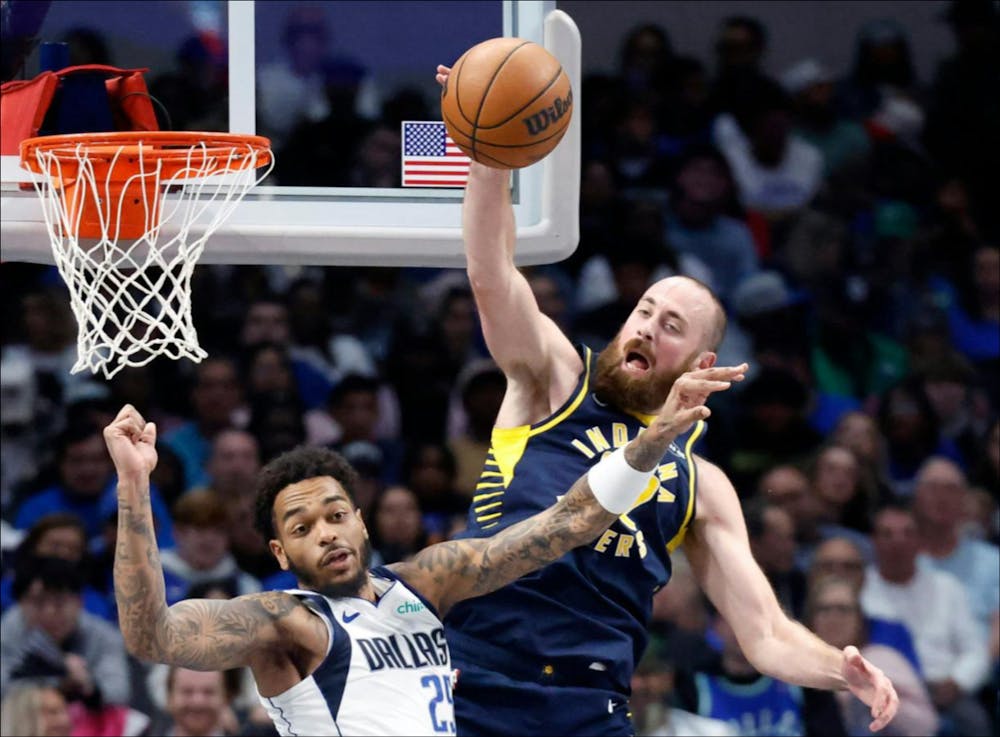
The Indiana Pacers entered the 2025-26 season with much to adjust to. The defending Eastern Conference champion lost its star point guard in Tyrese Haliburton to injury for the year, and lost center Myles Turner to the Bucks as well as Thomas Bryant to the Cavaliers.
The two noteworthy departures at the center position were undoubtedly bound to cause ripple effects in free agency and the draft. In response to those moves, the Pacers traded for Jay Huff from Memphis, secured a contract for James Wiseman and welcomed Isaiah Jackson back from injury.
As it would turn out, the center position has been a much more puzzling problem for the Pacers than the point guard spot. No one was ever going to be able to fully replace Haliburton’s production, simply because no one is quite like Haliburton. Nonetheless, transferring competency from another area of the floor to the point, primarily through Andrew Nembhard, has allowed Indiana to keep itself afloat at the top of the key and in the governance of the offense across the board.
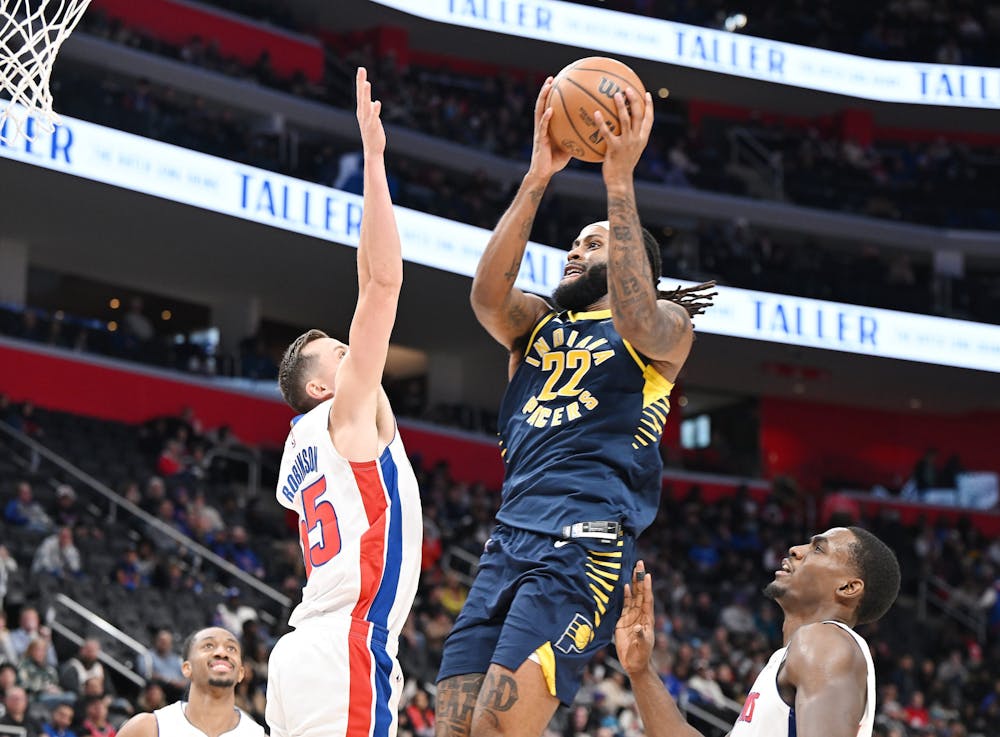
Between the blocks, however, Indiana has deployed a rotating cast of options. At the moment, the Pacers (who have the NBA’s worst record at 6-29) carry four centers on the active roster: Huff, Jackson, Tony Bradley and Micah Potter. Over the course of the season, additionally, Jeremiah Robinson-Earl has been signed and released once and Wiseman has been signed and released twice.
Following the signing of Potter, it’s no secret that the Pacers are struggling to settle on a long-term solution at center after Turner, who played for Indiana for a decade, vacated the starting position and alternate internal options continue to underwhelm.
The initial issue
Indiana’s vision when it obtained Huff seems to be that his skillset, in theory, could smoothly transition into the Pacers’ approach to the game. Turner acted as a 3-point threat and rim protector. Huff, in the 2024-25 season, averaged about a block a game off the bench and shot over 40% from beyond the arc. It was a perfect match.
In many ways, the Pacers were correct to seek out Huff. As a matter of fact, Huff is blocking more shots than Turner did in the season that led to an Eastern Conference championship. While Huff’s rebounding is a few steps behind Turner’s, the rim protection has undoubtedly been preserved from one season to the next.
The issue, then, lies on the offensive end of the floor. After shooting over 40% from long range in his last season in Memphis, Huff is an alarmingly lower 29% from beyond the arc so far in Indiana. His 1.3 makes per game is identical to his output from a season ago, but it consistently requires more shot attempts to reach it.
Huff’s misfires consistently waste offensive possessions, which is exacerbated by the fact that Huff is Indiana’s tallest player, meaning that when he shoots, the most towering stature on the floor is largely unavailable to participate in the race for a rebound.
Centers who can stretch the floor and are dangerous from around the perimeter are a valuable asset in the NBA, especially in a day and age in which the importance of perimeter shooting and transition ball is amplified. However, a center who hastily takes and misses 3-point shots effectively hands out defensive rebounds, and therefore extra possessions to the opposing team.
The introduction of Potter
A day after Christmas, the Pacers signed Potter. Swiftly, Potter proved his worth and complicated the status of the center position. In just five games, Potter has matched and exceeded Huff’s 3-point efficiency, shooting 40% from around the arc. Similarly, Potter’s 1.2 makes per game stands as respectable next to Huff’s 1.3, especially considering the lower number of misses.
On top of that, Potter’s rebounding is just a touch behind Huff’s, totaling 3.4 rebounds per game compared to Huff’s 3.8. The caveat is rim protection. Potter is markedly inferior in that realm, and is often toppled by superior competition between the blocks.
A complex dilemma
Therein lies the dilemma. Potter fulfills Indiana’s desire for a big man who can shoot the 3, and rebounds more than well enough to stay on the floor, but at times can be a defensive liability. Huff, on the other hand, poses more defensive strength and has shown potential from long range, but has not nearly reached that potential this season.
Principally, Indiana must determine how heavily it intends to prioritize the 2025-26 season, in which the team currently holds a 6-29 record, in relation to what could become a real 2026-27 championship run opportunity once Haliburton returns. That balance extends directly to the decision regarding which centers the Pacers elect to invest in.
The 2024-25 Pacers streamlined their success through a fast pace of play and excellence in transition. With that, Indiana benefited from the contributions of Turner, who was willing to run the floor and capable of stopping and popping triples.
The question for the Pacers in the absence of Turner is how dedicated are they to that style of play in the long run, and how much does it influence personnel decisions? With Potter, Indiana would sacrifice frontcourt defense for consistent offensive output. With Huff, Indiana would shift to a more traditional approach to the center position, trusting that his shooting will improve.
Whether the Pacers choose Huff, Potter or look elsewhere for reliable frontcourt production, Indiana’s decision will be critical to both the rest of this season and to the ceiling of the team’s success in the 2026-27 season, where it hopes a return to the NBA Finals is within reach.


